

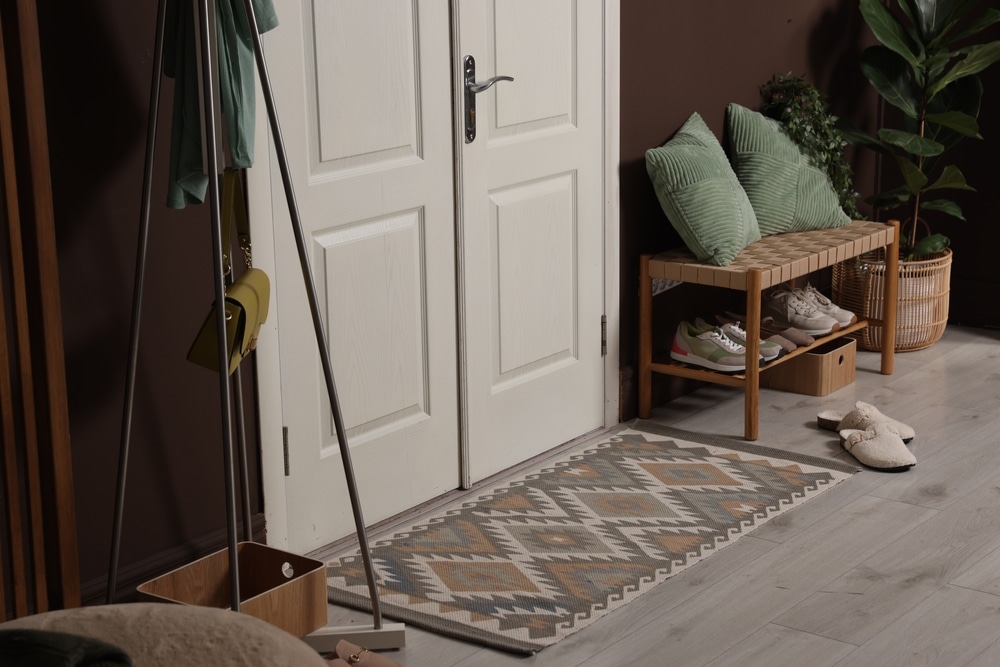
An entryway closet can become the household version of a junk drawer—only large enough to swallow coats, shoes, umbrellas, backpacks, sports gear and three reusable bags nobody remembers bringing home. Effective entryway closet organization is not about squeezing more into that crowded space. It is about making the items you use every day easy to grab, return and find again.
The best setup divides the closet into simple zones: occasional items at the top, coats in the middle, shoes at the bottom and small essentials on the door or side walls. Everyone gets a realistic amount of space, and anything that does not support leaving or entering the house moves elsewhere.
You do not need a custom closet system to make this work. A tape measure, a few well-chosen organizers and one honest decluttering session can completely change the space.
Empty the Closet Before Buying Anything
Buying baskets feels productive, but it is usually the wrong first step. Until the closet is empty, you cannot tell whether you have a storage problem, an excess-stuff problem or both.
Remove everything and group similar items together. Put coats in one pile, shoes in another and gather hats, gloves, umbrellas and bags separately. You may discover duplicate umbrellas, outgrown jackets and single gloves that have been waiting years for a reunion.
Sort everything into four groups:
- Used regularly
- Needed in the current season
- Belongs somewhere else
- Donate, repair or discard
Be strict about the closet’s purpose. It should support the household’s comings and goings. Formal coats worn twice a year, spare bedding, old paint supplies and a vacuum cleaner may all be useful, but they should not automatically claim the most convenient storage space in the house.
Place donations into bags immediately and move them out of the entryway. The U.S. Environmental Protection Agency recommends selling or donating usable clothes and household goods rather than automatically throwing them away. Check local organisations before donating, since accepted items and condition requirements vary.
Measure the Space and the Stuff
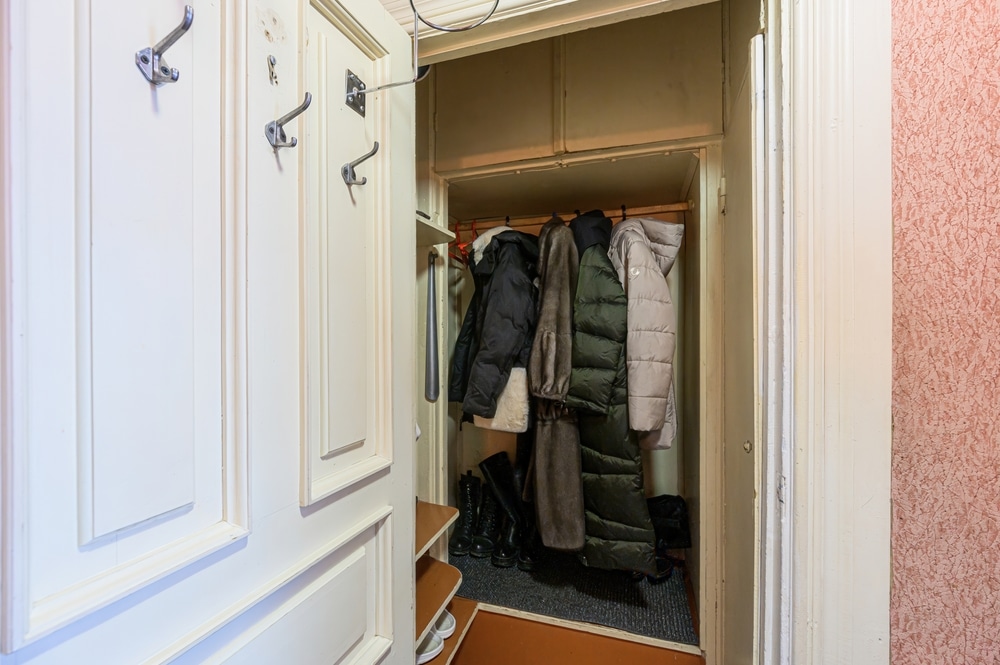
Measure the closet’s width, height and depth, followed by the usable space around its doors. Sliding doors can block access to the middle, while hinged doors need room to open. Note baseboards, light fixtures, electrical panels and any other obstacles.
Next, measure the items you plan to store. Count the coats that genuinely need to hang there. Measure the tallest boots and the widest bag. If you want bins on the top shelf, confirm that they fit through the door opening—not merely inside the closet.
Hanging clothes generally need a closet about 24 inches deep, with the rod positioned roughly 12 inches from the back wall. Most shoes fit on shelves around 12 to 14 inches deep. These are helpful starting points, not laws. Your own closet, belongings and reach should determine the final layout.
Do not install a rod at a supposedly standard height if half the household cannot reach it. A system only works when the people using it can put things away without assistance.
Build the Closet in Four Zones
The easiest setup uses the closet’s height instead of treating it as one large box. Each zone should hold items used at a similar frequency.
Zone One: The Top Shelf
Use the highest shelf for light, occasional items such as off-season accessories, travel gear or spare reusable bags. Avoid placing something there simply because you do not know where else it belongs.
Choose a small number of matching, easy-to-lift bins. Open baskets work well for soft items, while lidded containers protect rarely used belongings from dust. Label the front so you do not need to pull down every container to find a scarf.
Do not make the top shelf so deep that small items vanish at the back. Closet shelves are commonly around 12 to 16 inches deep because that provides useful capacity while keeping contents reachable. Guidance on typical closet shelf and rod dimensions can help with a DIY installation, but measure your bins before drilling.
Keep heavy objects lower. Lifting a bulky appliance or packed box above your head in a narrow entryway is awkward and potentially unsafe.
Zone Two: The Coat Rail
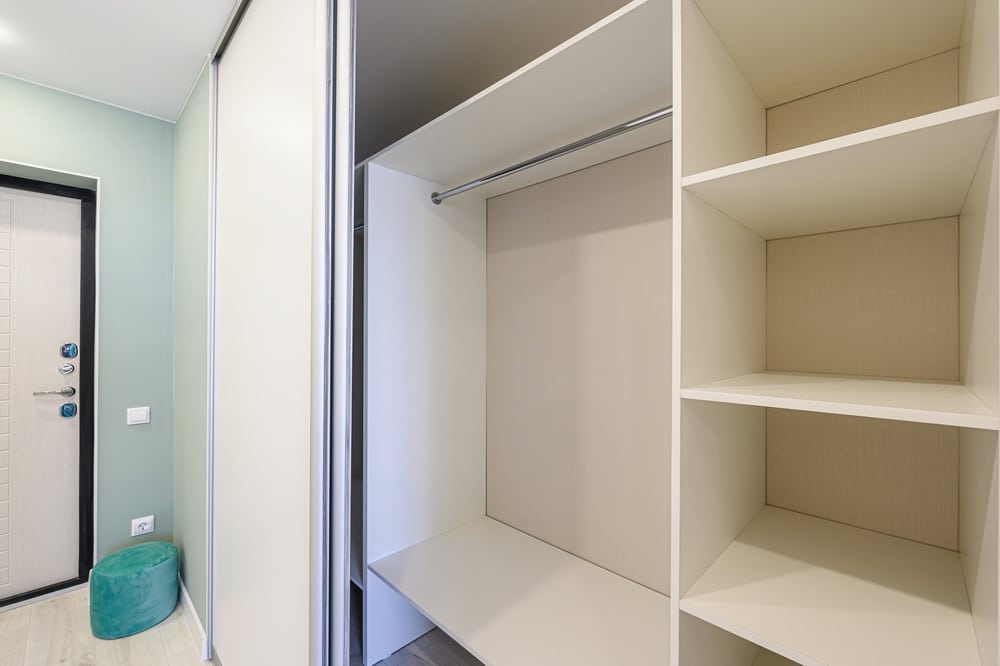
The central section belongs to current-season outerwear. Give each household member a set number of hangers rather than allowing the rail to expand indefinitely.
Slim hangers create more room, but leaving some breathing space is better than packing the rod tightly. When coats have to be crushed sideways, people tend to hang the newest one on a chair instead.
A simple rule works well: each person gets space for the coats currently in rotation. Extra-seasonal jackets move to bedroom closets, under-bed storage or another designated area.
If most of your outerwear is short, you may have enough unused space below it for an additional shelf or basket. A second hanging rod is rarely ideal for an entryway closet because winter coats are bulky and often long. Lower hooks are usually more useful for children’s jackets and everyday items.
Check that the rail has enough support before loading it with heavy coats. Long rods may require a centre bracket, depending on their material, length and manufacturer’s instructions.
Zone Three: The Shoe Level
Shoes belong near the floor, but not in a loose pile. A low rack with two or three levels keeps pairs visible and prevents the shoe avalanche that occurs whenever someone pulls from the bottom.
Store only frequently worn footwear here. Each person might receive one shelf, one basket or space for two pairs. The exact limit matters less than having one.
Use a waterproof boot tray for wet or muddy footwear. Let damp shoes dry before placing them in closed bins, and do the same with wet coats. Trapping moisture inside a packed closet encourages odours and can damage surrounding materials.
Tall boots need more vertical space than sneakers. Adjustable shelving is useful because it allows one section to accommodate boots without wasting the same amount of height across the entire rack.
Avoid fabric cubes directly on the floor if wet shoes regularly enter the house. Plastic, coated metal or another wipeable material will be much easier to clean.
Zone Four: Doors and Side Walls
The back of a hinged door can become the closet’s control centre. Use shallow hooks or pockets for gloves, hats, sunglasses, dog leads and other small items needed on the way out.
Do not load the door with heavy bags unless the hardware is designed for that weight. Too much strain can affect the hinges or prevent the door from closing properly.
Inside side walls are useful for hooks, particularly when the closet rod does not extend across the full width. Place adult bags higher and children’s items at a height they can manage independently.
Leave enough room around hanging coats. A clever hook becomes useless when it is buried beneath six puffer jackets.
Give Everyone a Landing Spot
Shared closets often fail because the storage belongs to “everyone,” which usually means nobody knows where anything goes.
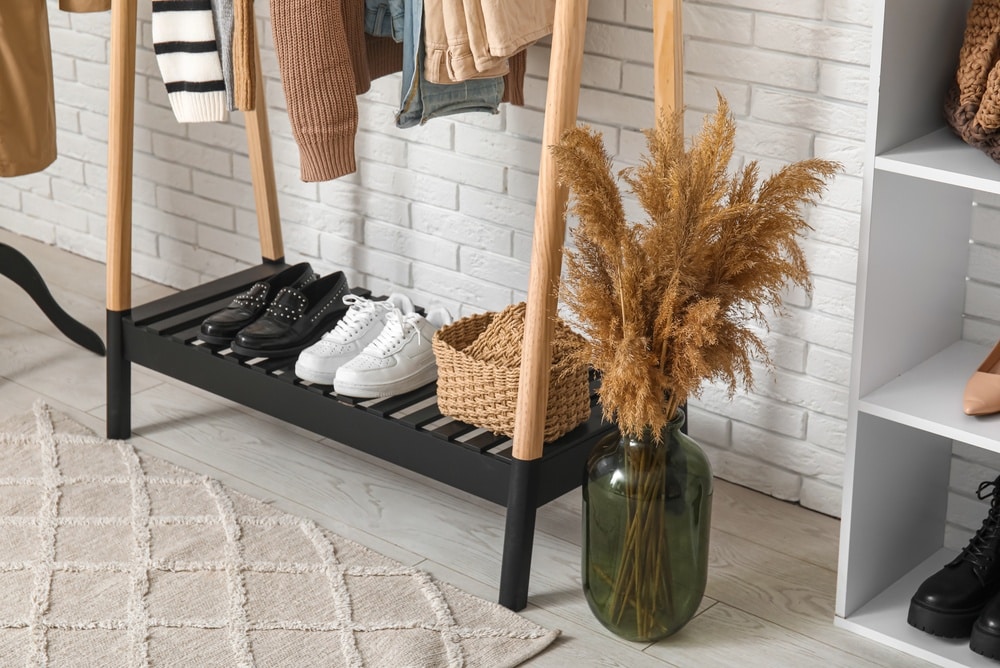
Assign each person a small home for daily belongings. It could be a labelled shoe shelf, one hook and a basket for accessories. Children need lower hooks and open containers; complicated lids and high hangers make it easier to drop everything on the floor.
Keep the system forgiving. A basket labelled “Mia” will probably be used. Separate containers for Mia’s wool hats, waterproof gloves and winter scarves may look wonderful for a week before becoming one mixed pile.
The same principle applies to adults. If you routinely walk in carrying a backpack, keys and sunglasses, give those objects homes close to the closet entrance. Do not design the system around an imaginary future in which you carefully fold every scarf after each use.
Create a Small Drop Zone
Not every entryway item belongs inside the closet. Keys, wallets, mail and phones need a shallow landing place rather than a deep basket where they disappear.
If space allows, add a small tray or wall-mounted ledge beside the closet. A few hooks can hold keys and a slim wall file can catch incoming mail. Keep this area intentionally small. A large console table invites paperwork, shopping bags and mystery objects to settle permanently.
Deal with mail before it becomes décor. Recycle obvious junk, move actionable documents to a proper task area and avoid using the entryway as long-term paper storage.
If no wall space is available, reserve one shallow door pocket for small everyday items. Do not mix keys with gloves, receipts and dog treats unless you enjoy searching through all four every morning.
Use Renter-Friendly Organizers Carefully
Renters can improve a closet without installing a permanent system. A freestanding shoe rack, tension rod, over-door organizer and removable labels can create useful zones with minimal changes.
Tension rods work best for light items such as scarves or empty hangers. Do not assume they can support a row of heavy winter coats. Check the product’s weight limit and test it gradually.
Adhesive hooks are convenient, but their performance depends on the wall surface, preparation and load. Follow the manufacturer’s instructions and avoid hanging valuable or heavy objects from them.
Freestanding drawer units and tall shelving should not simply be wedged into place. If an organizer could tip—especially in a home with children—secure it according to the manufacturer’s directions. The U.S. Consumer Product Safety Commission’s Anchor It campaign recommends anchoring furniture with drawers, doors and shelves to help prevent tip-over injuries. Renters can ask their landlord for permission to install appropriate restraints.

Avoid the Organizers That Create More Clutter
Not every storage product earns its space. Deep opaque bins encourage forgotten layers, while tiny divided containers require more sorting than most families will maintain.
A hanging shoe organizer can be helpful for accessories, but one filled with unrelated objects quickly becomes a wall of clutter. Clear pockets improve visibility, although they can also make the closet look busier.
Vacuum bags are useful for clean, completely dry off-season textiles. They are a poor choice for daily coats because opening, resealing and recompressing them adds too many steps.
Avoid filling every available inch. Empty space is part of the design. It gives coats room to hang, lets air circulate and creates capacity for a guest’s jacket or a new pair of boots.
Add a Five-Minute Reset
No entryway closet remains organised without a quick routine. Fortunately, it does not need a dramatic weekly overhaul.
Once a week:
- Pair loose shoes
- Empty accessory baskets of rubbish
- Return stray items to their proper rooms
- Hang coats left elsewhere
- Dry and clean the boot tray
- Move unused items out of the current-season zone
At the change of each season, rotate coats and footwear. Wash or clean items before storing them and repair missing buttons or broken zippers. If something was not worn during the entire season, ask whether it deserves another year of storage.
Keep one donation bag elsewhere in the house so unwanted clothing has somewhere to go immediately. Do not leave it in the entryway closet, where it can quietly become permanent inventory.
A Setup That Survives Real Life
The best entryway closet organization system is not the one with the prettiest matching baskets. It is the one that makes leaving the house easier and putting things away almost automatic.
Keep occasional belongings on the top shelf, current coats on the rail, everyday shoes near the floor and small essentials on hooks or in open baskets. Give each person a defined landing spot, leave some empty space and move everything unrelated to arriving or departing elsewhere.
When the closet is designed around real habits instead of perfect-looking storage, coats stop migrating to chairs, shoes stay in pairs and opening the door no longer requires a deep breath first.