

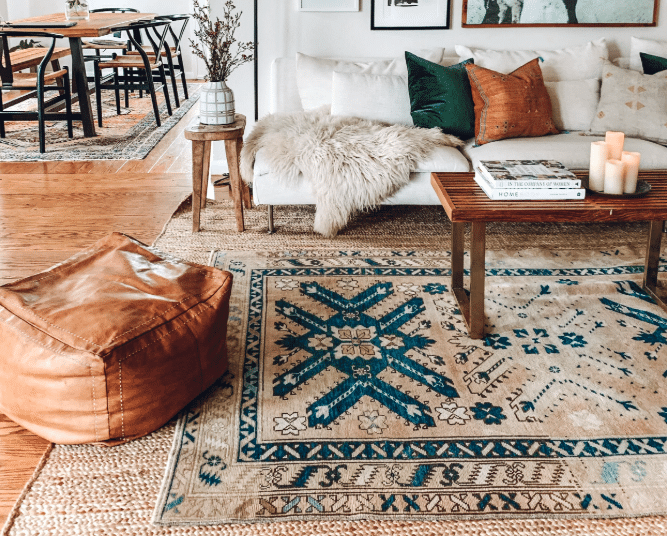
Rug layering tricks done right: Layering rugs on a budget is one of the easiest ways to make an ordinary room look more considered, colorful and expensive. Instead of paying for one enormous statement rug, you can pair an affordable neutral base with a smaller rug that has more personality. The result feels collected rather than bought in a single afternoon.
The trick is making those rugs look deliberately paired—not like one was dropped on top of the other to hide a stain. Size, texture, color and placement all matter, but the process is far less complicated than it sounds.
Here is how to create that designer-style layered look without spending designer-rug money.
Why Rug Layering Works So Well
A single rug has several jobs. It needs to suit the room, connect the furniture, introduce texture and cover enough floor to prevent the seating arrangement from looking stranded. Finding one rug that does all of that while staying within budget can be difficult.
Layering divides those jobs between two rugs.
The bottom rug provides scale and structure. It creates a generous foundation beneath the furniture and visually defines the area. The top rug supplies the interesting part: pattern, color, softness or an unusual shape.
This is especially useful when you love a vintage, handmade or boldly patterned rug that is too small for your space. Rather than buying a larger and more expensive version, you can place it over a modestly priced base rug. The smaller piece becomes a focal point instead of looking undersized.
Layering can also help separate different zones in an open-plan home. A large base may establish the main living area, while a smaller rug highlights a reading corner or the space around the coffee table.
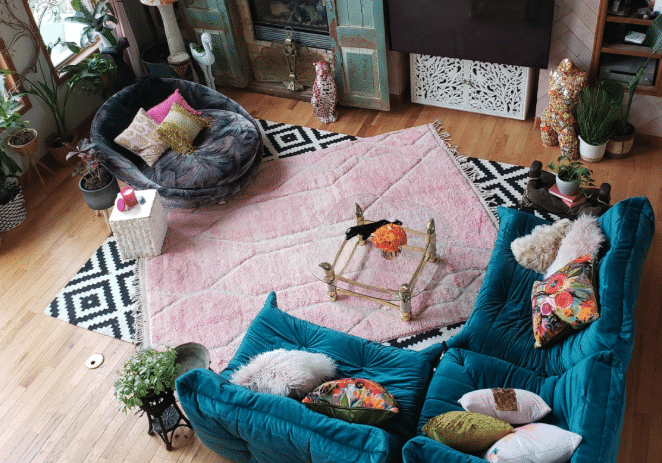
Start With a Large, Quiet Base Rug
The most reliable formula is a large, understated rug underneath and a smaller, more expressive rug on top.
For the base, look for simple flatwoven styles in beige, tan, cream, gray or another color already used around the room. Jute, sisal-look, cotton flatweaves and low-pile synthetic rugs are common options. The base does not need to be the star. In fact, it usually works better when it is not.
Natural-fiber rugs are popular for this job because their visible weave adds texture without competing with a patterned top layer. However, they come with limitations. Coarse jute or sisal may feel scratchy, shed fibers or be difficult to clean thoroughly. If you have crawling children, pets or a household prone to spills, a low-pile synthetic alternative may be more practical.
Keep the base relatively thin. A thick lower rug combined with another plush rug can create an awkward raised edge and make furniture less stable. Low, firm layers generally look neater and are easier to walk and vacuum over.
Get the Base Size Right Before Adding Anything Else
Layering cannot rescue a base rug that is much too small. If the bottom rug floats in the middle of a living room without connecting to the furniture, adding another rug only emphasizes the problem.
In a living room, aim for a base large enough to sit beneath at least the front legs of the sofa and main chairs. That makes the furniture group feel connected. A useful rug-size guide from Ruggable shows several possible layouts, including arrangements with all furniture on the rug and those with only the front legs resting on it.
Do not shop by label alone. A rug described as “large” online may look surprisingly modest once placed beneath a sofa. Mark the proposed dimensions on the floor with painter’s tape before ordering. Then stand in the doorway and view the outline from a distance.
For a layered arrangement, the top rug should be noticeably smaller than the base. A narrow strip of base showing around the edge can appear accidental. A more generous visible border makes the size difference clear and gives both rugs room to contribute.
Use the Expensive-Looking Rug Only Where It Counts
Here is the budget-saving part: the top rug is the only layer that needs much visual impact.
Because it covers less floor, you can hunt for a smaller vintage rug, faded Persian-style design, kilim, washable printed rug or soft shaggy piece. Small rugs are often cheaper, easier to transport and more plentiful in secondhand shops than room-size versions.
The top layer can also disguise wear on the base. A structurally sound secondhand rug with a faded central area may still work underneath another piece. Just inspect used rugs carefully for odors, pests, crumbling backing and stains before bringing them indoors.
Other promising places to search include outlet sections, sample sales, discontinued collections and local resale platforms. Carpet remnants can also make economical base layers if the edges are properly bound. Ask about the finished dimensions and binding charge before assuming a remnant will cost less than a ready-made rug.
Avoid buying a cheap rug purely because it is cheap. If its color fights with the room or its surface feels unpleasant, it will not become more useful after another rug is placed on it.
Connect the Rugs With One Shared Color
Two rugs do not need to match, but they should have something in common.
The easiest link is color. If the top rug contains rust, for example, a warm tan or oatmeal base will usually feel more natural than a cool silver-gray one. A navy patterned rug could sit over denim blue, charcoal or a neutral with cool undertones.
The shared color can be subtle. Even one minor shade repeated across both pieces may be enough to make the pairing look intentional.
If the room already has plenty happening—patterned curtains, colorful artwork or a dramatic sofa—keep one rug almost solid. Two assertive rugs plus several assertive furnishings can quickly turn “layered” into “visually exhausting.”
Combining patterns is possible, but vary their scale. Try a fine stripe under a larger floral, or a quiet diamond weave beneath a loose abstract design. The Spruce’s guide to layering area rugs also recommends using related hues or similar color intensity when mixing patterns.

Mix Textures Instead of Piling On More Pattern
A room can look richly layered even when both rugs are neutral. Texture often does more than color.
Try pairing:
- A flatwoven base with a soft wool-look top rug
- A tightly woven jute rug with a faded low-pile design
- A plain indoor-outdoor rug with a small plush rug
- A rectangular base with an irregular faux hide or sheepskin-style layer
The contrast should be easy to see and feel. Putting two nearly identical beige flatweaves together may simply look like overlapping mats. Changing the pile, weave or shape produces clearer depth.
There is a practical limit. Deep shag over thick, uneven jute can become difficult to vacuum and may cause the upper rug to shift. In dining areas, high-pile layers can also interfere with chairs. Reserve fluffier combinations for lower-traffic spots such as beside a bed or beneath a coffee table.
Place the Top Rug With a Purpose
Centered placement is the safest option, but it is not the only one.
In a symmetrical living room, center the smaller rug beneath the coffee table while allowing the base to frame it evenly. This creates a calm, polished look and works well when the top rug has a clear border.
For a more relaxed room, shift the top layer slightly to one side or rotate it at a modest angle. An angled rug can direct attention toward a fireplace, chair or artwork and loosen up a furniture arrangement that feels overly rigid.
The key is giving the placement a visual reason. The top rug might anchor the coffee table, create a soft landing beside the bed or mark a chair-and-lamp reading corner. A small rug sitting in an unrelated patch of open floor rarely looks convincing.
Do not force asymmetry into a busy walkway. Corners projecting into a route between doors, stairs or furniture are more likely to curl or become a tripping hazard.
Try Room-Specific Layering Formulas
Different rooms call for different combinations.
In the Living Room
Use a large, neutral base to contain the seating area, then place a smaller patterned rug beneath the coffee table. Let the upper rug extend beyond the table on every side so it does not resemble an oversized coaster.
If you own a beautiful but narrow vintage rug, try placing it across the front of the sofa instead of dead center. The deliberate offset can make its unusual proportions feel like a design decision.
In the Bedroom
Place a broad flatweave beneath the bed, then add a softer rug where your feet land. This gives you comfort in the spot where it matters without requiring an entire room-size wool rug.
Another inexpensive option is to layer a runner along one side of the bed. It works particularly well when the bed sits close to a wall and a perfectly centered rug would waste most of its surface underneath the furniture.
In the Dining Room
Be conservative here. The base should extend far enough beyond the table for chairs to remain on the rug when pulled out. Keep both layers low and secure so chair legs do not catch on a raised edge.
A top rug can work beneath a round table, but it needs to be large enough for the full chair area—not merely the tabletop. In many dining rooms, one properly sized, easy-clean rug is more practical than layering.
In an Entryway
A durable base can fill an awkwardly shaped hall, while a smaller washable rug introduces color near a console or bench. Avoid tall piles and loose corners. Entryways receive heavy foot traffic, wet shoes and frequent door movement, so easy cleaning matters more than dramatic texture.
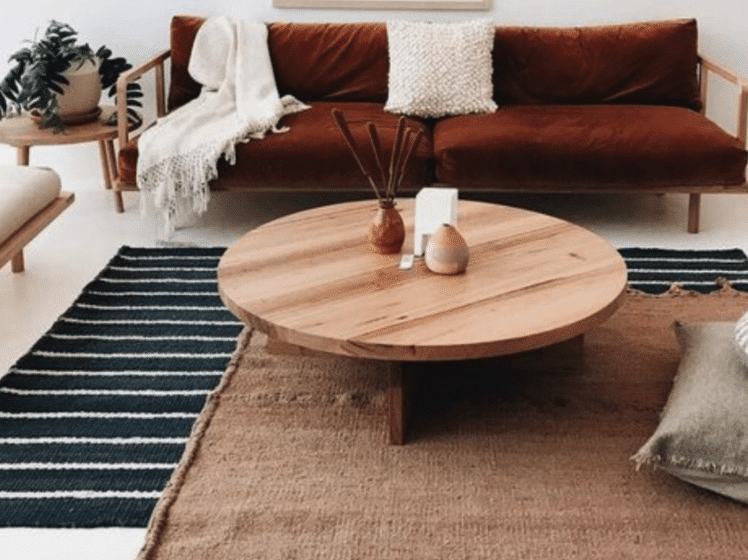
Make Safety Part of the Design
Layered rugs have more edges, which means more opportunities for sliding, rippling and curling.
Use a suitable rug pad beneath the bottom rug, and consider a thin non-slip layer between rugs if the top one moves. The pad should be slightly smaller than the rug so it stays hidden. IKEA’s overview of anti-slip pads and underlays explains how underlays can reduce movement while also helping prevent bunching and folded edges.
Check that any pad is approved for your particular flooring. Materials that are suitable for tile may not be recommended for every wood, vinyl or coated floor. Follow the flooring manufacturer’s guidance, especially if the floor is new or covered by a warranty.
Furniture can help anchor a rug, but it is not a complete substitute for proper grip. A coffee table may hold down the middle while the corners still curl upward.
Do a Trial Run Before Committing
Before buying the second rug, test the idea using something you already own. Spread out the base, then place a folded sheet, blanket or taped paper outline where the upper rug would go. This lets you judge the proportions and placement without paying return shipping for a bad guess.
Photograph the setup from the doorway. A phone photo makes spacing problems surprisingly obvious. Check whether the top layer looks large enough, whether the angle appears intentional and whether the combination competes with nearby furniture.
If you are shopping in person, take photos of the room in natural and artificial light. Colors can shift considerably between a bright store and a dim living room, so confirm the return policy before removing packaging or tags.
Keep Both Layers Clean
Layered rugs can trap dust and debris between them. Vacuum the exposed surfaces regularly using settings appropriate for each material, and periodically lift the top rug to clean underneath.
Treat spills promptly, particularly on absorbent natural fibers. Always follow the rug manufacturer’s care instructions and test any cleaning solution in a hidden area first. The Carpet and Rug Institute’s general stain-removal guidance recommends blotting rather than rubbing, which helps avoid spreading a spill through the fibers.
Rotate the upper rug occasionally if sunlight or foot traffic hits one side more heavily. Also check the floor below for trapped moisture, grit or color transfer. Never replace the layers until both rugs and the floor are fully dry.
Know When Not to Layer
Rug layering is not automatically better in every room. Skip it if doors already scrape the floor, someone in the home has mobility difficulties, or the only available placement creates exposed edges in a busy walkway. It may also be more trouble than it is worth beneath rolling office chairs or dining chairs that are moved constantly.
Very small rooms can feel chopped up when several strong borders cross the floor. In that case, one simple rug—or a tonal combination with minimal contrast—may create a calmer, more spacious effect.
Finally, layering will not make unsuitable materials practical. A delicate vintage rug still needs protection from muddy shoes, pets and spills, even when it has a durable rug underneath.
A Designer Look Without the Designer Price
The best formula for layering rugs on a budget is refreshingly simple: buy enough inexpensive base rug to anchor the furniture, then spend selectively on a smaller piece with color, pattern or softness. Keep a clear size difference, connect the layers through color, secure every edge and place the top rug where it serves an obvious purpose.
Done well, the arrangement feels warm, collected and tailored to the room. More importantly, it lets one modestly sized statement rug do the decorative work of a much more expensive one.