

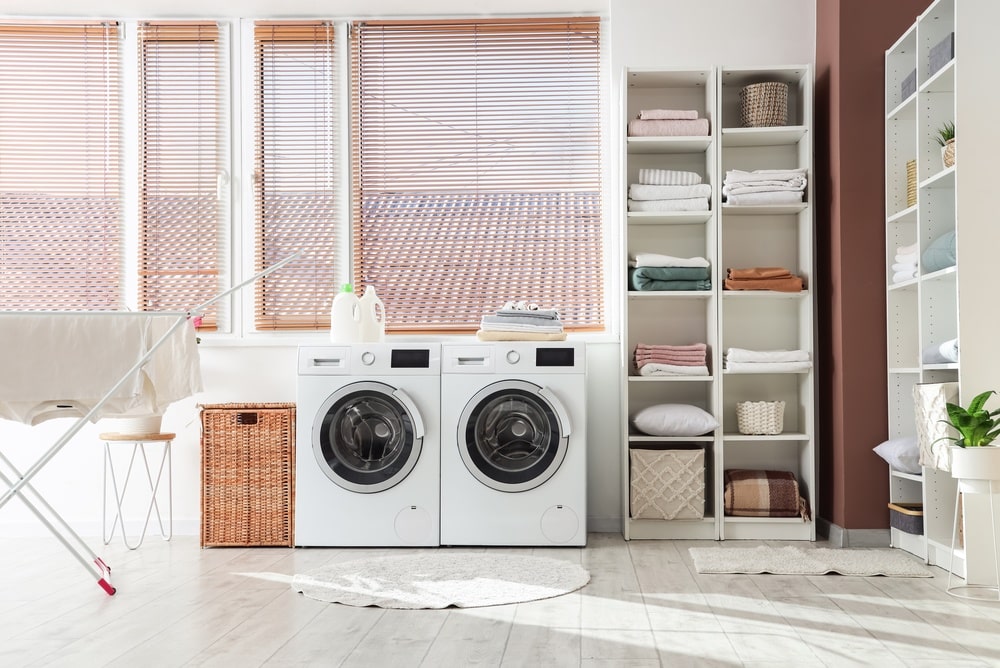
Let’s be honest about laundry rooms. They’re the rooms we promise ourselves we’ll organize “this weekend,” and then six months later we’re still wedging detergent bottles between the washing machine and the wall like we’re playing some kind of household Tetris. The internet is full of dreamy laundry rooms with matching glass canisters and decorative wallpaper, but most of us aren’t trying to win a Pinterest board — we just want to organize laundry room chaos into something that actually stays organized for more than three days.
That’s the harder part. Anyone can tidy up. Keeping a laundry room tidy is a different sport entirely. It’s less about pretty bins and more about designing a system your household will actually maintain when nobody’s watching. Here’s how to do it properly.
Why Most Laundry Rooms Become Disasters
Before we fix anything, it helps to understand why laundry rooms fall apart in the first place. They’re high-traffic, multi-function spaces that handle dirty clothes, cleaning supplies, lightbulbs, weird hardware, the random toolbox, sometimes pet food, and approximately seven half-empty bottles of stain remover. They’re often small, often poorly lit, and almost always under-storaged.
The other issue: laundry is a process, not an event. Clothes move through the room in stages — dirty, washing, drying, folding, putting away — and each stage needs space. When you try to organize laundry room layouts without thinking about workflow, things pile up at the bottleneck. Usually that’s the “needs to be folded” stage, which is how dining tables across the world end up buried in clean socks. A system that actually stays tidy works with this flow, not against it.

Step One: Declutter Before You Organize Anything
This is the part everyone wants to skip, and it’s the part that decides whether your work lasts. You cannot organize laundry room shelves that are full of things that don’t belong there.
Pull everything out. Yes, everything. Detergents, dryer sheets, the inexplicable bag of rubber bands, the broken iron you keep meaning to repair, the lightbulbs, the cleaning supplies, the holiday decorations someone shoved in there in 2019. Lay it all out on the floor and sort into three piles: keep, relocate, toss.
Most of what’s in a laundry room shouldn’t be there. Holiday decor? Garage or attic. Old paint cans? Disposed of properly. Empty detergent bottles? Recycling. Items you “might use someday”? Be honest with yourself.
When you’re done, you’ll likely have half the stuff you started with — and that’s the realistic baseline you can build a system around.
Step Two: Think in Zones, Not Shelves
This is the single biggest mindset shift. People try to organize laundry room contents by container — “I’ll put things in nice baskets” — when they should be organizing by zone.
A functional laundry room has three or four clear zones:
The dirty zone — where laundry comes in. This needs hampers (preferably sorted by lights, darks, and towels). Stackable or rolling hampers are ideal because they save floor space and can be moved around when needed.
The washing zone — the area immediately around the machines. This is where your detergent, fabric softener, stain remover, and dryer sheets live. Keep ONLY what you use weekly here. Backup supplies go elsewhere.
The processing zone — where clothes get folded, hung, or sorted. This is the zone most homes don’t have, and it’s the reason laundry piles up. Even a small folding surface (a countertop over the machines, a wall-mounted drop-down shelf, a small table) makes a massive difference.
The supply zone — where backup detergent, lightbulbs, cleaning rags, and other “not weekly” items live. This can be a cabinet, a top shelf, or under a sink.
When you organize laundry room space by zone, things naturally stay in their proper place because each item has an obvious home.

Step Three: Use Vertical Space Like You Mean It
Almost every laundry room has wasted vertical space. Walls go bare, the area above the machines is empty, and the back of the door is doing nothing useful.
Wall-mounted shelves above the washer and dryer are non-negotiable. If you can’t install permanent shelving, an over-the-machine rack or a freestanding shelving unit works just as well. A tension rod stretched between two cabinets gives you an instant hanging space for shirts coming straight out of the dryer (which prevents wrinkles and saves ironing time — quietly one of the best laundry hacks ever).
The back of the door is prime real estate. An over-the-door organizer can hold spray bottles, lint rollers, mesh laundry bags, and small items that otherwise float around. A small pegboard mounted on a wall can hold scissors, measuring cups for detergent, dustpans, and brushes.
If you organize laundry room space vertically, you’ll be amazed how much storage suddenly appears in a room you thought was tiny.
Step Four: Containers — But Be Strategic
Now we get to the fun part. Containers genuinely help, but only if you’re thoughtful. The mistake most people make is buying pretty bins first and then trying to make their stuff fit into them. Do it the other way around: figure out what you need to store, then buy containers that fit those items.
A few rules that actually matter:
Use clear bins for things you reach for often. You want to see at a glance whether you’re running low on dryer sheets. Opaque bins are fine for backup supplies you don’t access daily.
Label everything. Even if you live alone. Especially if you live with other people. Labels are the difference between a system that survives one week and one that survives one year. They also subtly train everyone in the household to put things back where they belong.
Match container sizes to what’s inside. A giant bin half-full of small items wastes space and looks messy. A tiny bin overflowing with stuff defeats the point.
When you organize laundry room cabinets with containers that actually fit your supplies, the room stops drifting back into chaos.

Step Five: Build the Maintenance Habit
This is the part nobody talks about, and it’s why every previous attempt to organize laundry room storage failed within a month.
A tidy laundry room is not a one-time achievement. It’s a maintenance routine. The good news: it takes about 10–15 minutes per week, total. Here’s the rhythm that works:
After each laundry load, take 30 seconds to put detergent and supplies back where they belong. Don’t leave them on top of the machine “for next time.” Once a week, do a five-minute reset — wipe down surfaces, check that bins are still in their zones, toss any empty bottles. Once a month, look at the system honestly and ask whether anything’s not working. If the “delicates” hamper keeps overflowing, maybe you need a bigger one. If the folding zone keeps getting buried, maybe the problem is that clothes don’t have a clear path out of the room.
A system that requires zero upkeep doesn’t exist. A system that requires 10 minutes a week is sustainable. That’s the goal.
Mistakes That Will Sabotage You
A few warnings from people who’ve tried to organize laundry room spaces and failed.
Don’t over-decant. Pouring detergent into pretty glass jars looks great on Instagram but creates extra work every time you buy a new bottle. Keep the original packaging unless you have a strong reason not to.
Don’t store things in the laundry room that don’t belong there. The room is small. Every square inch given to non-laundry items is a square inch your laundry doesn’t have.
Don’t buy organizers before you know what you need. The number of laundry rooms full of unused storage products purchased “in advance” is staggering. Empty the room, identify the actual needs, then shop.
And don’t aim for perfection. A laundry room that’s 80% organized and stays that way is infinitely better than one that’s 100% organized for two weeks and then implodes.
The Real Secret
If you boil all of this down, the trick to laundry room organization that actually stays tidy is this: design the system around how laziness flows. Make the right thing easy and the wrong thing slightly harder. Keep frequently-used items at eye level. Put hampers where dirty clothes naturally land. Place detergent within arm’s reach of the machine. Make folding easier than not folding.
When you organize laundry room space this way, tidiness stops being a discipline and becomes the path of least resistance. That’s what makes it last.
Now grab a trash bag, clear the room, and start fresh. Your future self — the one who walks into a calm, functional laundry room next Tuesday — will be very pleased with you.
Do you want more amazing tips to reorganize your home? Then visit our home organization page right here