
A leather sofa is one of those purchases that makes you feel like a real adult. It’s also one of those purchases where one wrong move with a cleaning product can leave a permanent mark you’ll be staring at for the next decade. Leather is forgiving in some ways — it ages beautifully, hides crumbs, doesn’t absorb spills as fast as fabric — but it’s also a natural material with specific needs. The internet is full of conflicting advice, half of it written by people who’ve clearly never owned one. So let’s settle this. The right way to clean leather sofa surfaces is genuinely simple once you know the rules, and most of the products you need are already in your house.
This guide walks through what actually works, what to absolutely avoid, and how to keep your sofa looking great for years.
Why Leather Is Different (And Why That Matters)
Before any cleaning happens, it helps to understand what you’re working with. Leather is animal hide that’s been treated and finished, and unlike fabric, it has a protective top layer that can be stripped, dried out, or cracked by the wrong cleaners. Once that layer is damaged, you can’t really repair it at home — you’re looking at professional restoration or living with the consequences.
This is why so much advice about how to clean leather sofa upholstery emphasizes “less is more.” You’re not deep-scrubbing carpet. You’re caring for something closer to skin than fabric. The goal is to remove dirt and oils gently, then keep the leather hydrated enough that it stays supple over time.
Know What Kind of Leather You Have
This single step decides which cleaning method is safe. Not all leather is the same, and using the wrong technique on the wrong type can ruin a sofa instantly.
Most modern leather sofas use protected leather (also called pigmented or top-grain) — it has a coating that makes it more durable and forgiving. Water doesn’t soak in immediately, and you can safely use a damp cloth on it.
Some higher-end sofas use aniline or full-grain leather, which is unprotected. Water sinks in and darkens the surface. These need much gentler handling and specialty products only.
The water drop test settles it. Find a hidden spot — the back of the sofa, underneath a cushion — and put a tiny drop of water on it. If it beads up and rolls off, you have protected leather. If it soaks in and darkens, your leather is unprotected and you should be extremely conservative with anything liquid.
When you clean leather sofa surfaces without first identifying the leather type, you’re rolling dice with a piece of furniture that probably cost more than a vacation.
The Tools You Actually Need
You don’t need fancy products. In fact, simple is safer.
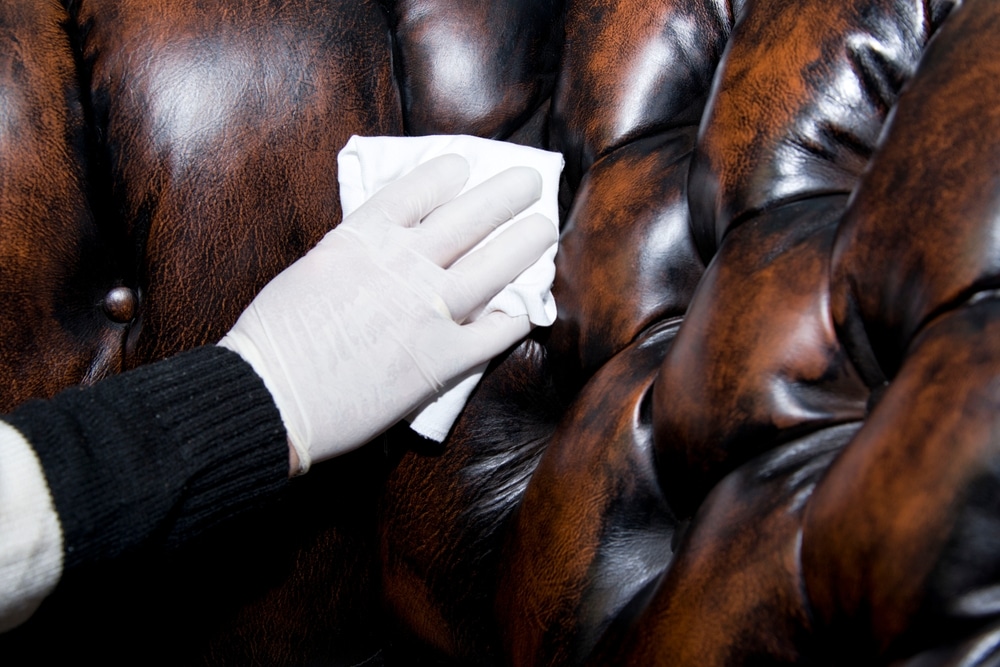
A few microfiber cloths (at least three — one for cleaning, one for rinsing, one for drying), a soft-bristle brush attachment for your vacuum, mild soap (Castile soap, gentle dish soap, or saddle soap works), distilled water (tap water can leave mineral deposits on some leathers), and a dedicated leather conditioner for occasional use. That’s the entire kit.
What you don’t need: bleach, ammonia, alcohol, all-purpose sprays, baby wipes, abrasive sponges, paper towels, or anything labeled “antibacterial” unless it’s specifically formulated for leather. The wrong product can strip the finish, dry out the hide, or cause discoloration that doesn’t come back.
The Weekly Routine
This is the part most people skip. The single most important thing you can do to clean leather sofa cushions and frames isn’t a deep clean — it’s regular dusting. Dust and grit are abrasive. Every time someone sits down, those particles grind against the leather and cause micro-wear that adds up over years.
Once a week, run a soft microfiber cloth over the whole sofa. Pay attention to seat cushions and armrests, which collect the most skin oils. Use the soft-brush attachment on your vacuum to get into the crevices between cushions and along the seams. This takes maybe four minutes, and it’s the single biggest factor in how good your sofa looks five years from now.
If something spills, blot it immediately with a dry microfiber cloth. Don’t rub. Rubbing pushes liquid deeper into the leather and spreads the stain. Blot, blot again, then let it air dry. This habit alone prevents 90% of stains from ever becoming permanent.
The Monthly (or As-Needed) Light Clean
Once a month — or whenever the sofa is starting to look dingy — do a slightly deeper clean. This is where most people make their first mistakes, so go slow.
Vacuum first. Always. Cleaning over dust just grinds it into the leather. Then mix a tiny amount of mild soap with distilled water in a bowl. We’re talking a few drops of soap per cup of water — barely soapy at all.
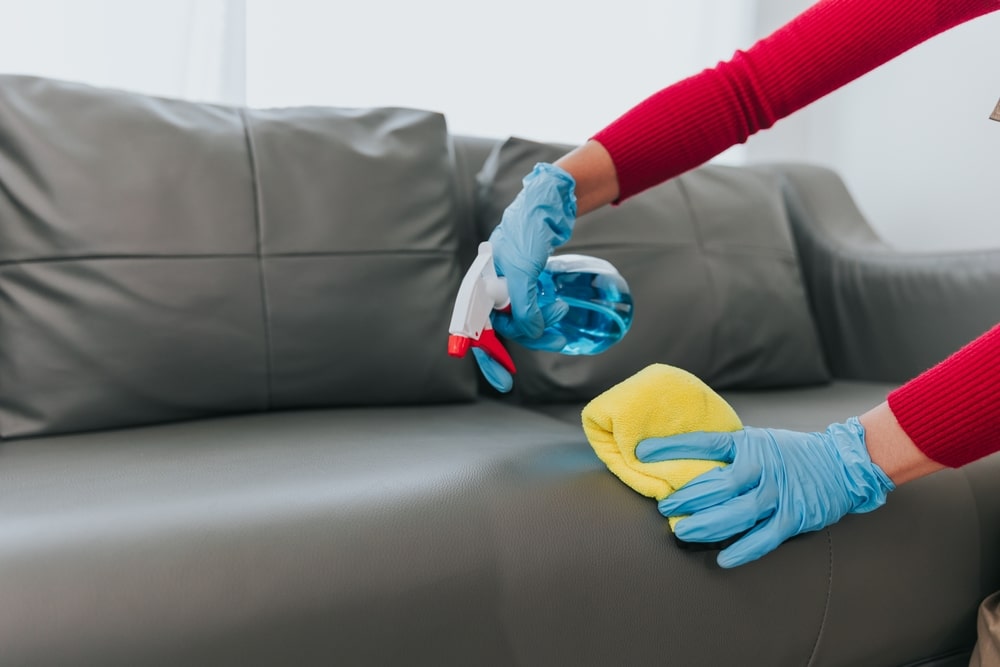
Dampen a microfiber cloth in the solution and wring it out until it’s barely damp. Not wet. The single biggest mistake people make when they try to clean leather sofa surfaces is using too much water. Leather and water have a complicated relationship, and saturating the surface can cause spotting, darkening, or even mold underneath the coating.
Wipe the leather in gentle circular motions, working in small sections from top to bottom. Rinse the cloth in your bowl frequently to avoid spreading dirt. Then take a second cloth dampened only with plain distilled water and wipe everything again to remove any soap residue. Finally, buff dry with a third clean microfiber cloth. Don’t let the sofa air dry in damp spots — moisture left to evaporate on its own can leave water marks.
This whole process takes maybe 20 minutes for a full sofa. Done quarterly, it’s enough to keep most leather looking great.
Tackling Specific Stains
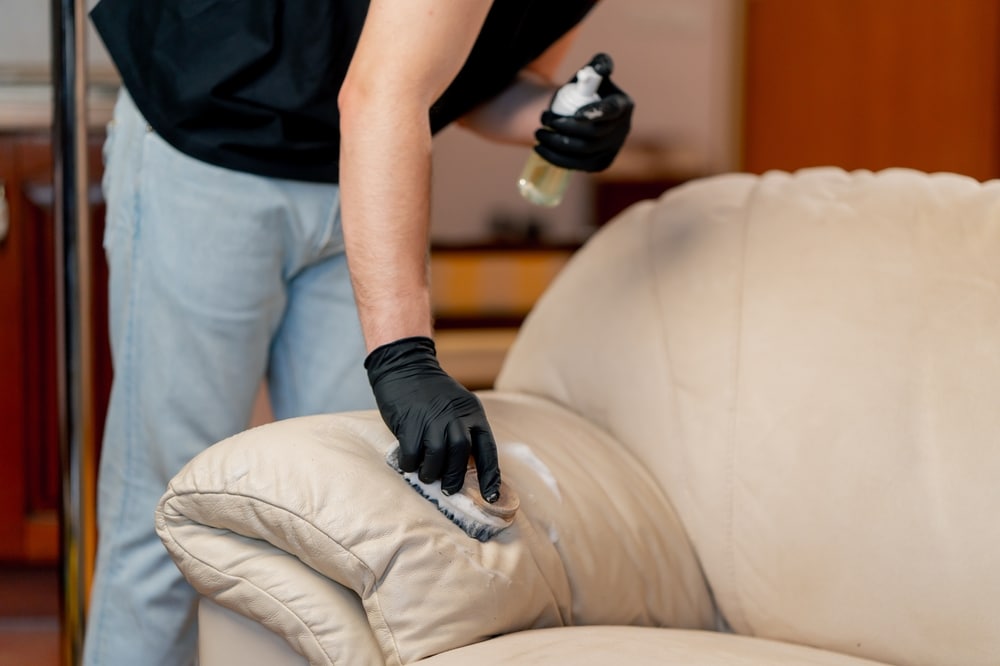
Real life happens. When it does, here’s what works and what doesn’t.
Oil and grease stains. Sprinkle cornstarch or talcum powder directly on the spot and let it sit for several hours, ideally overnight. The powder pulls the oil up out of the leather. Brush off gently with a soft cloth. Don’t scrub.
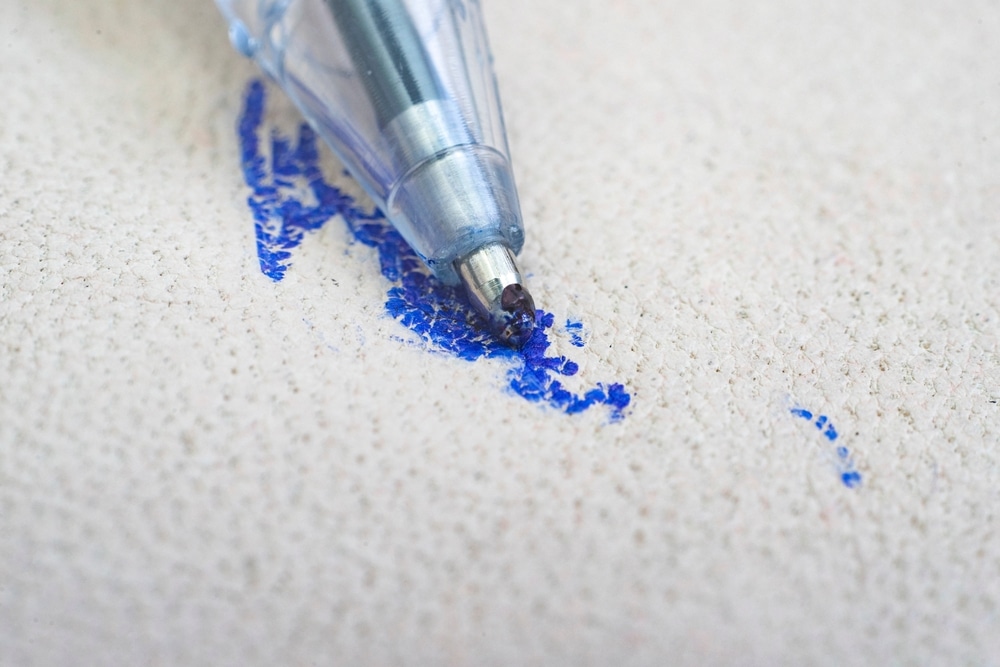
Ink. Lightly dab — not rub — with a cotton swab dipped in a tiny bit of rubbing alcohol. Use multiple fresh swabs as the ink lifts. This works on most protected leather but should be tested in a hidden spot first, because alcohol can damage some finishes. On unprotected leather, skip this entirely and call a professional.
Food and drink spills. Blot immediately with a dry cloth, then follow the standard light cleaning method described above.
Scuff marks. A tiny dab of non-gel toothpaste on a damp cloth, rubbed gently, often lifts surface scuffs. Wipe clean and buff dry afterward.
Mystery dark spots. When in doubt, less is more. A barely-damp cloth with a hint of soap, gentle circular motion, and patience handle most everyday grime without risk.
Always — always — test any cleaning method on a hidden area first. Spend two minutes confirming the spot doesn’t change color or finish before applying anything to the visible part of your sofa. This single habit has saved an enormous number of sofas from disaster.
The Conditioning Question
Here’s where things get slightly debated. Leather is a natural material, and over time it can dry out, especially in heated homes or sun-exposed rooms. Conditioning helps keep it supple. But conditioning too often makes leather feel sticky and can attract dirt.
The general rule: condition a leather sofa every 6 to 12 months, depending on how dry your environment is and how much sun it gets. If the leather still feels soft and looks healthy, you can stretch this to once a year or even longer. If it’s starting to feel stiff or look dull, condition sooner.
Use a dedicated leather conditioner (Lexol, Chemical Guys, or Leather Honey are widely recommended). Apply a small amount to a clean cloth — never directly to the leather — and work it in with gentle circular motions. Let it absorb for the time the bottle recommends, then buff off any excess with a clean cloth.
When you clean leather sofa upholstery and follow up with occasional conditioning, you’re giving the material exactly what it needs to age gracefully instead of cracking.
Things to Never Do
1. Never use bleach, ammonia, or any product containing them on leather. They strip the finish and discolor the surface permanently.
2. Never use baby wipes regularly, even though they feel convenient. Most contain alcohol or fragrances that dry out leather over time.
3. Never use a hair dryer or place the sofa near a heater to speed drying. Heat makes leather brittle.
4. Never saturate leather with water. A barely-damp cloth is the absolute maximum.
5. Never use abrasive sponges, scrub brushes, or paper towels. Microfiber only.
6. Never spray cleaner directly onto the sofa. Apply to the cloth instead. This prevents over-saturation and makes it easier to control how much product touches the leather.
When in doubt about how to clean leather sofa surfaces, do less, not more. Leather damage is often the result of trying too hard with the wrong product.
Sun and Heat: The Silent Killers
A quick word on placement, because it affects how often you’ll need to clean leather sofa surfaces in the first place. Direct sunlight is brutal on leather — it fades color and dries out the surface over time. If your sofa sits by a sunny window, consider sheer curtains, a UV film on the glass, or rearranging the room. Same goes for placement near radiators or fireplaces. Heat draws moisture out of the leather and accelerates cracking.
A well-placed sofa needs less maintenance than one that’s constantly battling environmental damage. This is the kind of preventive care that matters more than any specific cleaning product.
To clean leather sofa surfaces without damaging them, the formula is simple. Identify your leather type, vacuum and dust regularly, use mild soap and distilled water sparingly when needed, blot spills immediately, condition once or twice a year, and avoid the cleaners that cause permanent damage. Keep it out of direct sun. Test everything in a hidden spot first.
Done consistently, this routine takes very little time and keeps a leather sofa looking great for decades. It’s genuinely one of the easier pieces of furniture to maintain — once you know the rules. Now go take a look at your couch. Probably time for a quick dust-off.
Do you want more amazing tips to clean your home? Then visit our Cleaning & Maintenance page right here