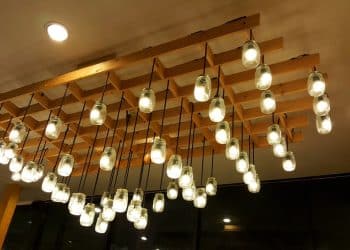

Some rooms are not badly decorated. They are simply being interrogated by the wrong light bulb.
A cold, overly bright bulb can make a comfortable bedroom resemble a waiting room. A weak bulb leaves a kitchen looking gloomy, while poor-quality light can drain the color from paint, furniture and textiles. Before buying new cushions or reaching for a paintbrush, try one of the simplest affordable lighting ideas available: replace the existing bulb with a warm, properly sized, high-CRI LED.
The change takes about a minute, requires no electrical work and can cost well under €15. Done correctly, it makes colors look richer, corners feel softer and the whole room appear more inviting.
The trick is not buying the most complicated smart bulb on the shelf. It is choosing the right combination of color temperature, brightness and light quality.
Why One Bulb Can Change an Entire Room
Light reaches almost every visible surface in a room. Change that light and the walls, furniture, artwork and fabrics all look slightly different.
Many homes contain bulbs chosen for convenience rather than atmosphere. A previous tenant may have installed the brightest option available. Several bulbs may have been replaced at different times, leaving one lamp glowing yellow while another shines blue-white. Sometimes people check the wattage but ignore everything else printed on the packaging.
Replacing one poorly chosen bulb can produce a more noticeable improvement than adding another decorative object. Warm light complements wood, cream, terracotta and other natural tones. Better color rendering helps paint and fabrics appear closer to their intended colors. The right brightness removes harsh glare without sending the room into darkness.
It is an especially useful update for renters because nothing permanent changes. Keep the original bulb somewhere safe, use your preferred LED while living in the property and reinstall the old one before leaving.

The Reliable Combination to Look For
For living rooms, bedrooms and dining spaces, a 2700K warm-white LED with a Color Rendering Index of around 90 is a dependable starting point. The bulb’s lumen output should then be matched to the amount of light the lamp needs to provide.
This combination creates a comfortable glow while allowing the colors in the room to look natural. It is warm rather than orange and cozy without automatically being dim.
It is not a universal prescription for every fitting. A bathroom mirror, home workshop or kitchen preparation area may benefit from cooler or brighter light. However, 2700K works well in rooms primarily used for resting, eating or socializing.
Color Temperature Controls the Mood
Color temperature does not describe how physically hot a bulb becomes. It tells you whether the white light appears warm and yellowish or cool and bluish.
Lower Kelvin numbers produce warmer-looking light. Higher numbers create a cooler appearance. ENERGY STAR’s explanation of color temperature places warm white around 2700K to 3000K, while light at 4000K and above looks noticeably cooler.
A bulb rated at 2200K produces a very warm glow similar to candlelight. It can look beautiful in a low table lamp, reading corner or exposed fitting where atmosphere matters more than visibility. However, it is usually too amber for a room’s only light source and may not provide enough clarity for cleaning, cooking or working.
At 2700K, the light remains cozy without looking intensely orange. This is usually the safest choice for a quick living-room or bedroom improvement. If a room feels cold despite having comfortable furniture, replacing a 4000K or 6500K bulb with a 2700K version can change its character immediately.
A 3000K bulb creates a slightly crisper white. It can work well in modern kitchens, bathrooms and hallways, particularly where an extremely warm bulb would make the room appear dull.
Bulbs rated at 4000K and above produce cooler light that can be useful over a workbench or kitchen counter. In a bedroom or lounge, the same bulb may look stark. Cool light is not inherently unpleasant; it is simply better suited to some activities than others.

Measure Brightness in Lumens, Not Watts
Watts describe how much energy a bulb uses. Lumens describe how much visible light it produces.
The distinction matters because modern LEDs can generate very different amounts of light while consuming relatively little electricity. Choosing a new bulb by wattage alone therefore tells you very little about how bright the room will appear.
A small decorative lamp may need only 200 to 470 lumens. A bedside or general table lamp often works well with approximately 470 to 806 lumens. A ceiling fitting expected to illuminate most of a room may require between 806 and 1,500 lumens, depending on the room’s size, wall colors, shade and number of bulbs.
Do not automatically choose the highest number. A powerful exposed bulb can produce uncomfortable glare. Put the same bulb behind an opaque shade and much of its output may be softened or trapped.
An 806-lumen bulb is a useful middle-ground option for many domestic lamps. At the time of writing, IKEA Netherlands listed a two-pack of dimmable E27 bulbs producing 806 lumens at 2700K for €4.99. Prices and availability vary between countries, but the example shows that better light does not require an expensive smart-home system.
CRI Is the Number Most People Overlook
Two bulbs can share the same brightness and color temperature but still make a room look different. Their Color Rendering Index may explain why.
CRI indicates how accurately a light source reveals colors compared with a suitable reference source. The scale commonly runs to 100. A score of 80 is acceptable for general domestic use, while a score of 90 or above usually allows colors to appear fuller and more natural.
This is particularly noticeable in rooms where color does much of the decorative work. Under poor-quality light, a green wall can appear greyish, food may look less appetizing and carefully selected fabrics can lose their richness.
A high CRI cannot rescue an unsuitable paint color, but it can stop the bulb from working against the rest of the room. If two otherwise similar bulbs are available at comparable prices, the CRI 90 option is generally the better choice.
Check the Fitting Before You Shop
The ideal bulb will not help if it does not fit the lamp.
After switching the light off and allowing the existing bulb to cool, remove it carefully and check the code printed on its base. E27 is the larger Edison screw commonly used in ceiling and table lamps. E14 is a narrower screw fitting often found in bedside lamps and smaller fixtures. GU10 bulbs use two short pins with widened ends and frequently appear in spotlights.
The number after the letter E refers to the approximate diameter of the screw base in millimeters. The bulb’s overall shape and size also matter. A large decorative globe may have the correct base but still be too wide or tall for the shade.
A small fitting does not necessarily mean weak light. For example, dimmable E14 bulbs rated at 806 lumens, 2700K and CRI 90 were listed at €4.99 for two at the time of writing. Treat that as a useful price and specification reference rather than a requirement to buy one particular product.
Choose Frosted or Clear Glass Carefully
A clear filament-style bulb can be attractive in an open cage, transparent pendant or completely exposed fitting. The visible filaments become part of the design, making the bulb decorative even when the fixture itself is simple.
The downside is glare. Looking directly at bright LED filaments can be uncomfortable, particularly when the bulb hangs near eye level. Clear glass also creates sharper points of light and stronger shadows.
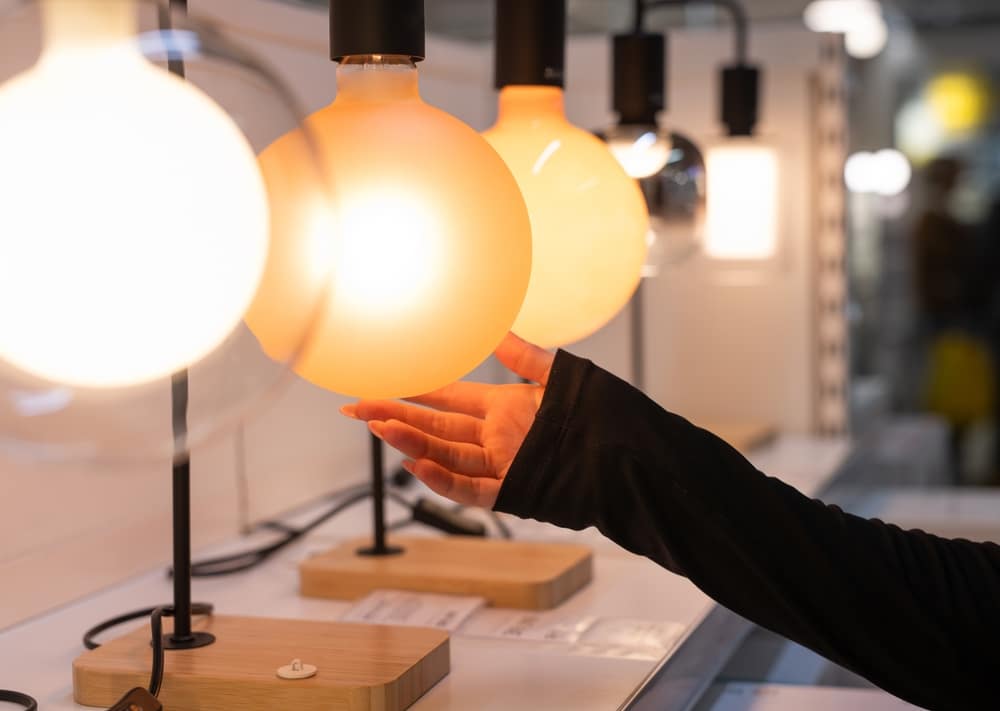
A frosted or opal bulb spreads light more evenly. It is usually the better choice inside a fabric shade, ceiling globe or ordinary table lamp. It may look less decorative when switched off, but the illuminated room often looks better.
When the bulb will remain visible, consider its brightness and appearance together. A decorative bulb producing around 150 to 250 lumens can create a soft evening glow. It will not provide enough light for reading, cooking or illuminating an entire room.
Make the Swap in the Most Important Lamp First
Begin with the lamp that has the greatest influence on the space. This may be the central ceiling fixture, the lamp beside the sofa or the bedside light used every evening.
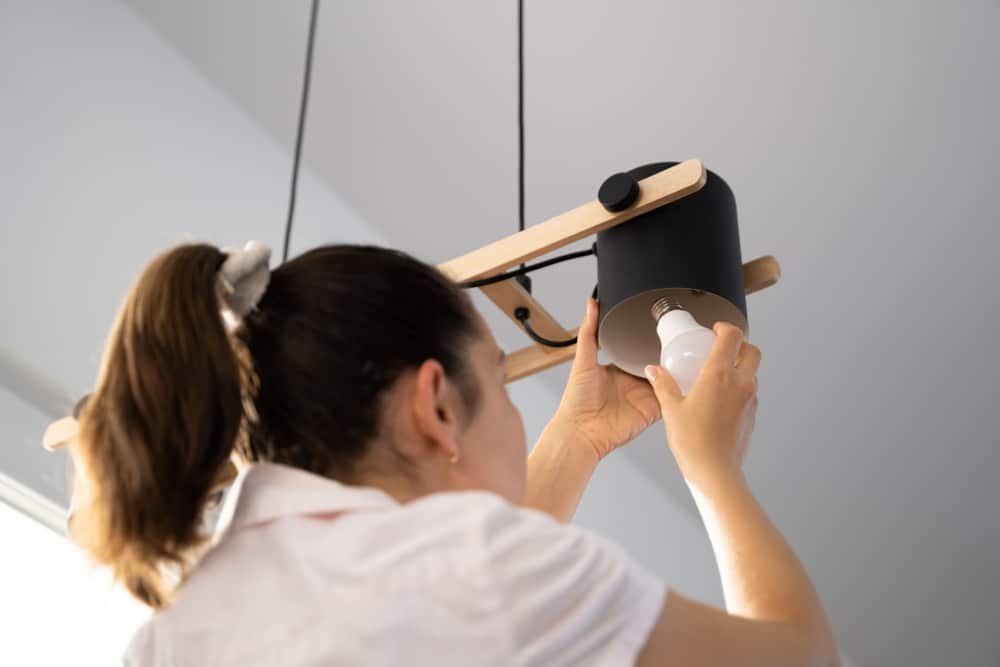
Switch off the power at the wall and wait for the old bulb to cool completely. Check the fitting, maximum permitted wattage and available space inside the shade before installing the replacement.
Never force a bulb into place. Once it is secure, switch the lamp on and wait until evening before deciding whether the change has worked. Daylight can hide differences that become obvious after sunset.
If the room feels too dark, choose more lumens rather than immediately moving to a cooler color temperature. If it remains harsh, try a frosted bulb, a lower lumen output or a dimmable alternative.
Give your eyes some time to adjust as well. Warm light may initially appear yellow if you have spent months under a cool-white bulb. After several evenings, the old light may be the one that suddenly looks unnatural.

Be Careful With Dimmers and Enclosed Fixtures
A bulb described as dimmable will not necessarily work smoothly with every wall dimmer. Older controls designed for incandescent lamps can cause LEDs to buzz, flicker or behave unpredictably at lower settings.
Check the bulb manufacturer’s compatibility information before buying. If the lamp has a straightforward on-off switch, a non-dimmable LED is perfectly adequate and may cost less.
Heat also deserves attention. Fully enclosed fixtures trap warm air, which can reduce the working life of LEDs not designed for that environment. The US Department of Energy’s bulb-buying guidance recommends checking the packaging or technical specifications to confirm that a bulb is suitable for an enclosed fixture. It also advises verifying compatibility when LEDs will be connected to a dimming system.
The maximum wattage printed on the fitting should always be respected. LEDs normally use far fewer watts than old incandescent bulbs, but the fixture’s instructions still apply. Damaged sockets, loose wiring and cracked fittings are not part of this simple project and should be assessed by a qualified electrician.
Why One New Bulb May Not Solve Everything
A better bulb can transform how a room feels, but it cannot correct every lighting problem.
A large room illuminated only by one central ceiling light may still look flat because all the light comes from the same direction. A deep shade may trap much of the bulb’s output, while dark walls absorb more light than pale ones. A badly positioned lamp cannot properly illuminate a desk or kitchen worktop, regardless of the bulb inside it.
The next improvement is to layer the lighting. A ceiling fixture can provide general visibility, a table or floor lamp can create atmosphere, and a focused lamp can illuminate a specific task. There is no need to buy everything at once. Correct the bulb in the lamp you use most, then observe where unwanted shadows or glare remain.
Mirrors and pale surfaces can help bounce existing light through a room. Placement matters, though. A mirror opposite a window can increase the sense of daylight, while one directly reflecting an exposed bulb may simply double the glare.

Is a Smart Bulb Worth It?
Some adjustable smart bulbs cost less than €15 and allow you to change the brightness or move between warm and cool white light. That flexibility can be useful in a room serving several purposes, such as a living room that doubles as a workspace.
Check the complete setup before buying. Some smart bulbs require a separate remote, hub or compatible Thread border router. A €10 bulb can quickly become part of a much more expensive system. Other bulbs can be controlled directly through an app, but they still add setup and connectivity that may not be necessary.
For a quick and dependable improvement, an ordinary high-quality LED is often the smarter purchase. It works from the existing switch, does not require an account and will not become temporarily unavailable because the Wi-Fi is having a difficult afternoon.
The Best Under-€15 Lighting Swap
For most living rooms, bedrooms and dining areas, the safest choice is a frosted 2700K LED with CRI 90 and a brightness appropriate for the fixture. Around 470 lumens creates gentle accent lighting, while approximately 806 lumens suits many ordinary table and bedside lamps. A higher output may be necessary when the bulb is responsible for most of the room’s general light.
The bulb must have the correct fitting, fit physically inside the shade and be compatible with any dimmer or enclosed fixture. Those checks take slightly longer than grabbing the cheapest box, but they prevent flicker, glare and another disappointing light.
The best affordable lighting ideas do not require rewiring, new furniture or a weekend of DIY. Sometimes a room already has everything it needs but is being shown in the wrong light. Replace the harsh or mismatched bulb with a warm, properly sized, high-CRI LED, and that under-€15 swap can make the entire space feel calmer, richer and much more intentional.