

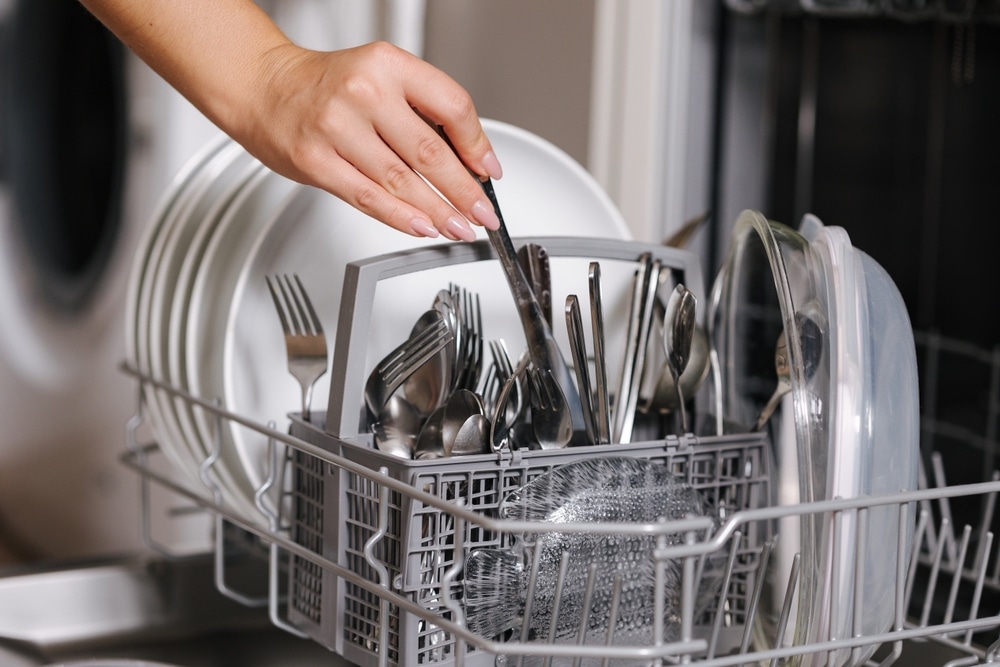
Your dishwasher washes dirty plates every day, but what happens to all the rice grains, sauce, labels and mysterious crunchy bits it removes? Many of them end up in a small filter at the bottom of the machine.
Leave that filter alone for too long and the dishwasher may begin to smell, drain poorly or return tiny particles to supposedly clean dishes. Fortunately, the basic clean dishwasher filter routine takes only a few minutes and requires no expensive products.
There is one important catch: not every dishwasher has the same filtration system. Some have removable manual filters, while others use self-cleaning filters or hard-food disposers. Before twisting anything, check which type is fitted to your machine.
What Does a Dishwasher Filter Actually Do?
A dishwasher does not continually fill itself with fresh water throughout the entire wash. During parts of the cycle, it filters and recirculates water through the spray arms.
The filter helps keep that process under control. Depending on the machine, it may:
- Trap food before it reaches the drain or pump
- Stop debris from returning to plates and glasses
- Protect internal components from fragments of food, paper and broken glass
- Help water circulate and drain correctly
Manual filters are usually made from fine mesh and plastic. They trap debris quietly but need occasional cleaning. Self-cleaning systems may use a grinder or chopper to break particles into smaller pieces before sending them towards the drain.
Self-cleaning does not mean that the whole dishwasher never needs maintenance. It simply means you may not have a removable filter that requires routine washing.
How to Tell Whether the Filter Needs Cleaning
You do not need to wait for a warning light. The dishwasher will often provide several less glamorous clues.
A dirty filter can contribute to:
- Grit or specks left on clean dishes
- Food particles inside cups and bowls
- A stale or sour smell when you open the door
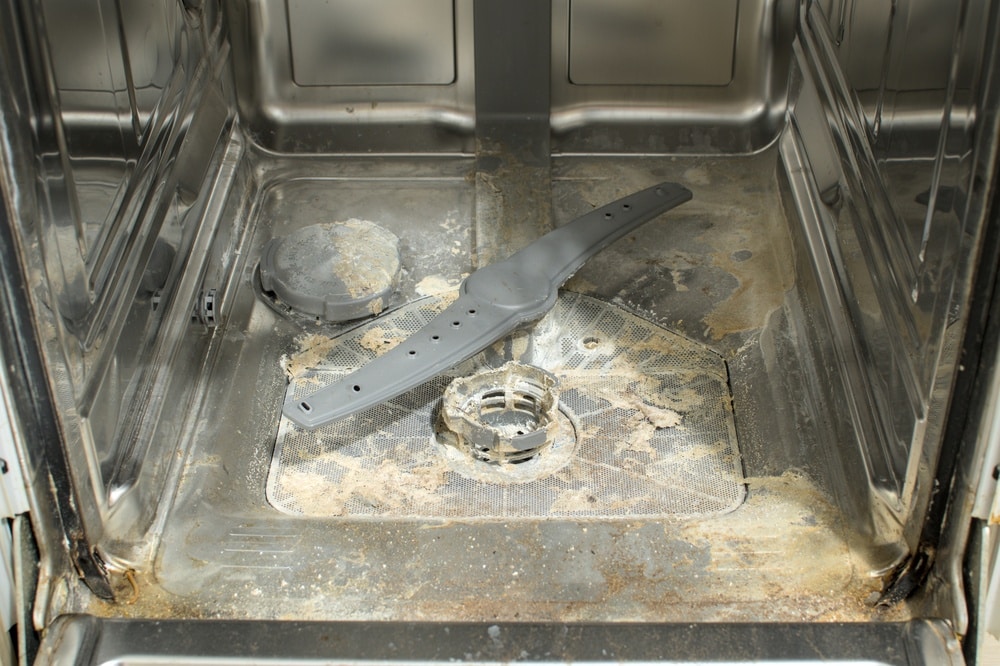
- Visible sludge around the filter
- Slower drainage
- Water remaining higher than usual in the bottom
- Gradually worsening wash results
A small amount of clean water around the filter area may be normal. Some machines retain water to keep seals from drying out, so a shallow puddle does not automatically mean the drain is blocked. A large amount of dirty water, however, deserves investigation.
Odours are another useful clue, but they do not always come from the filter. Food can also collect around the door seal, beneath the lower spray arm or inside the drain hose. Treat filter cleaning as the first check rather than a guaranteed cure for every dishwasher problem.
First, Find Out Which Filter You Have
Open the dishwasher and pull out the bottom rack. A removable manual filter is normally located on the floor of the tub, beneath or close to the lower spray arm.
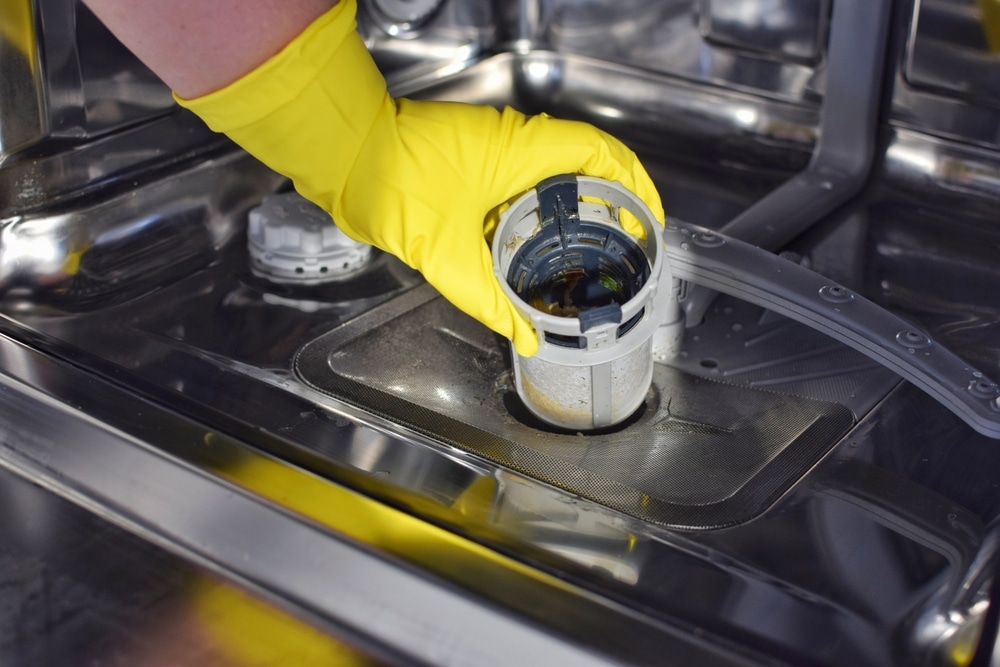
It often looks like a short cylinder with a twist handle. This upper assembly may sit inside a wider, flat mesh screen. Some machines use two or three interlocking pieces.
If you cannot see an obvious handle, do not start removing screws. Your dishwasher may have a self-cleaning system, a fixed screen or a different filter arrangement. Find the model number—usually printed on a label around the door frame—and check the appliance manual.
Whirlpool notes in its dishwasher-cleaning instructions that some filters cannot be removed. KitchenAid also documents models with maintenance-free filter systems and removable foreign-object cups rather than the familiar cylindrical filter.
The manual wins over any general online tutorial. It will show the correct direction to turn the filter, identify removable parts and explain whether the spray arm needs to come off first.
What You Need
Cleaning a removable filter is a small job. You will usually need:
- Rubber gloves
- Warm running water
- Mild dish soap
- A soft toothbrush or small nylon brush
- A soft cloth or sponge
- A towel
- A bowl for carrying the dirty filter to the sink
Avoid steel wool, wire brushes and rough scouring pads. Fine filter mesh can bend or tear, creating openings that allow food to circulate through the machine.
You also do not need drain cleaner, chlorine bleach or a powerful disinfectant. Harsh products may damage dishwasher components, react with other residues or leave something you do not want near your dishes.
How to Clean a Dishwasher Filter Step by Step
1. Let the Machine Cool
Wait until the dishwasher has finished its cycle and cooled down. LG advises waiting before handling internal parts because the tub can remain hot after operation.
Make sure the machine is switched off. If you intend to reach beyond the normal removable filter area or remove screwed-down components, disconnect the power first and follow the manual. Routine filter removal should not turn into an improvised appliance repair.
Put on gloves, especially if glass has broken in the dishwasher recently. Sharp fragments can hide beneath cloudy water or food residue.
2. Remove the Lower Rack
Slide the bottom rack out as far as it will go. On many models, it can be lifted slightly and removed from its tracks, giving you more room to work.
Take a quick photograph of the filter area before touching anything. This provides a useful reference if several pieces come out together and you forget how they were positioned.
3. Remove the Upper Filter
Grip the cylindrical filter and turn it in the direction shown in the manual. Many common filters unlock with a quarter-turn counterclockwise, but that is not a universal rule.
Lift it straight upwards once it releases. If it refuses to move, stop. Forcing a filter can crack the handle, damage its locking tabs or distort the mesh.
Some debris may be sitting loosely inside the filter. Carry it to the sink in a bowl rather than dropping wet food across the kitchen floor.
4. Lift Out the Lower Screen
If your machine has a separate flat filter, locate its opening or edge. Lift it slightly and pull it out according to the manufacturer’s instructions.
Do not pry at it with a knife or screwdriver. A lower screen that appears fixed may be designed to remain in place.
KitchenAid’s official filter-cleaning guide shows a common two-piece arrangement, but even models from the same brand can differ.
5. Empty the Loose Debris
Tip scraps into the rubbish or food-waste bin. Do not wash a thick lump of food into the kitchen sink unless you want to move the blockage from one appliance to another.
You may find more than food. Common filter discoveries include pieces of paper labels, fruit seeds, cocktail sticks, small bones and fragments from chipped dishes.
Inspect the parts under good light. A torn screen or broken locking tab may require a replacement rather than a scrub.

6. Rinse With Warm Water
Hold the filter beneath warm running water and rinse it from several angles. In many cases, water pressure will remove most of the loose residue.
Add a small amount of mild dish soap if the filter feels greasy. Gently work it over the mesh and plastic with your fingers, a soft sponge or a soft brush.
Bosch recommends warm, soapy water and a soft brush in its filter-maintenance instructions. Concentrate on folds, seams and the inside of the cylinder, where grease can hold particles in place.
Scrub lightly. The goal is to clear the mesh, not polish it with enough force to change its shape.
7. Clean the Filter Well
Before replacing the parts, wipe the empty filter recess with a damp cloth. Pick up visible food carefully and check for fragments of glass.
Do not push debris deeper into the drain opening. Avoid dismantling the pump cover unless your manual provides instructions for your exact model. Pump areas may contain sharp objects and moving parts.
If there is a large pool of water, remove enough with a cup or sponge to inspect the area. Persistent standing water after filter cleaning could point to a blocked hose, air gap, garbage-disposal connection or failed drain component.
8. Reinstall Every Piece Securely
Return the lower screen to its original position. It should sit flat without rocking or leaving raised edges.
Insert the upper filter and turn it until it locks. A filter that spins freely may not be secured properly. Whirlpool warns not to run a dishwasher without its filters correctly installed because doing so can damage the machine and reduce cleaning performance.
Gently check that everything is stable, then replace the lower rack. Make sure the spray arm turns freely and does not strike the filter or rack.
9. Run a Short Test
Run a short empty cycle or rinse programme if the manual recommends it. Listen for unusual grinding, rattling or scraping, which could mean a component was installed incorrectly.
After the cycle, check that the dishwasher drained normally and that no warning code appeared. If the filter has shifted, reinstall it before washing dishes.
How Often Should You Clean It?
There is no single schedule that fits every household.
Manufacturers’ recommendations range from frequent checks to cleaning every few months. The correct interval depends on the filter design, number of weekly loads and how much food is left on dishes.
A practical starting point for a removable manual filter is once a month. Check it more often if:
- You run the machine every day
- People load dishes without scraping them
- Your household cooks with lots of rice, seeds or fibrous foods
- Paper labels regularly come loose from jars
- You notice smells or gritty dishes
If the filter is nearly clean every month, extend the interval. If it contains a small compost heap after two weeks, shorten it. LG’s filter-cleaning schedule similarly varies the frequency according to usage and preloading habits.
Should You Rinse Dishes First?
Remove bones, pits, toothpicks and large pieces of food before loading. Scraping plates into the bin is usually enough.
Completely washing dishes at the sink can waste water and is unnecessary for many modern machines. It may also leave some dishwasher detergents with less food soil to act upon.
The useful middle ground is simple: scrape, do not scrub. Remove anything large enough to block a filter, but let the dishwasher perform the washing job you bought it to do.
Also peel loose paper labels from jars. Those labels can break apart during a hot cycle and collect in the filter, spray arms or drain system.
Mistakes That Can Damage the Filter
The most common mistake is forcing a part that has not been unlocked correctly. Filter handles and retaining tabs are plastic, so enthusiasm is not a substitute for the manual.
Other mistakes include:
- Running the dishwasher without the filter
- Reinstalling the lower screen upside down
- Leaving the upper filter unlocked
- Scrubbing mesh with steel wool
- Using boiling water that can distort plastic
- Reaching blindly into the pump area
- Treating a maintenance-free system like a removable one
- Assuming a machine-cleaning tablet also empties a manual filter
A cleaning cycle can remove grease and mineral deposits from parts of the machine, but it does not magically lift a lemon seed or piece of glass from a filter cup.
When Filter Cleaning Is Not Enough
A clean filter should improve problems caused by trapped debris. It cannot repair a failed pump or straighten a kinked drain hose.
Arrange professional help if the dishwasher continues to hold substantial dirty water, leaks onto the floor, produces electrical smells, repeatedly displays a drain error or makes a new grinding noise. The same applies if you discover damaged mesh or cannot lock the filter into position.
Poor washing after filter cleaning may have another simple cause, such as blocked spray-arm holes, incorrect loading, unsuitable detergent or low water temperature. Check those items before assuming the entire appliance has failed.
A Five-Minute Habit With a Visible Payoff
The dishwasher filter is easy to ignore because it works below the racks, out of sight. Unfortunately, all the debris it catches remains very real.
Once you know how your model comes apart, cleaning it is little more than a rinse, a gentle brush and careful reassembly. Check it monthly at first, adjust the schedule to your household and never operate the machine with a loose or missing filter.
Those few minutes can reduce odours, stop old food from returning to clean dishes and help the dishwasher do its job properly—which is considerably better than opening the door to find yesterday’s dinner sprinkled over today’s glasses.