

A tidy home looks good at first glance. Surfaces are clear, pillows are straight, and nothing feels immediately out of place. An organized home, on the other hand, feels good to live in. Things are easy to find, mess doesn’t spread as quickly, and daily life flows with less friction. These two ideas are often treated as the same thing, but they’re not—and confusing them is one of the reasons so many people feel like they’re constantly cleaning without ever feeling settled.
Most of us aim for a tidy home because that’s what we’re taught to notice. It’s visual, immediate, and socially recognizable. You can see it in photos and feel proud of it when someone drops by unexpectedly. But a tidy home doesn’t necessarily support how you live. In fact, many tidy-looking homes require constant effort to maintain precisely because they aren’t organized underneath the surface.
Understanding the difference between tidy and organized can completely change how you approach your space. It can also explain why some homes always seem calm, even when they’re a little messy, while others look neat but feel exhausting to keep that way.
What a Tidy Home Really Is
A tidy home is primarily about appearance. It’s the result of resetting a space so that nothing looks out of place. Items are put away, surfaces are cleared, and visual clutter is minimized. Tidy is what happens when you clean up before guests arrive or straighten the house at the end of the day.
There’s nothing wrong with wanting a tidy home. Visual calm matters, and clutter can absolutely affect mood. The problem starts when tidiness becomes the goal instead of the byproduct. When your focus is on how things look rather than how they function, tidiness becomes fragile. One busy morning or one rushed evening can undo hours of effort.
A tidy home often relies on constant correction. Things are moved back where they “should” go, even if those places aren’t convenient. Over time, this creates a cycle where you’re always resetting the space instead of letting it support you naturally.
What an Organized Home Actually Does
An organized home is built around use, not appearance. It’s designed to make everyday actions easier, faster, and less mentally taxing. Items live where they’re needed, not where they look best. Storage exists to reduce effort, not to hide everything from view.
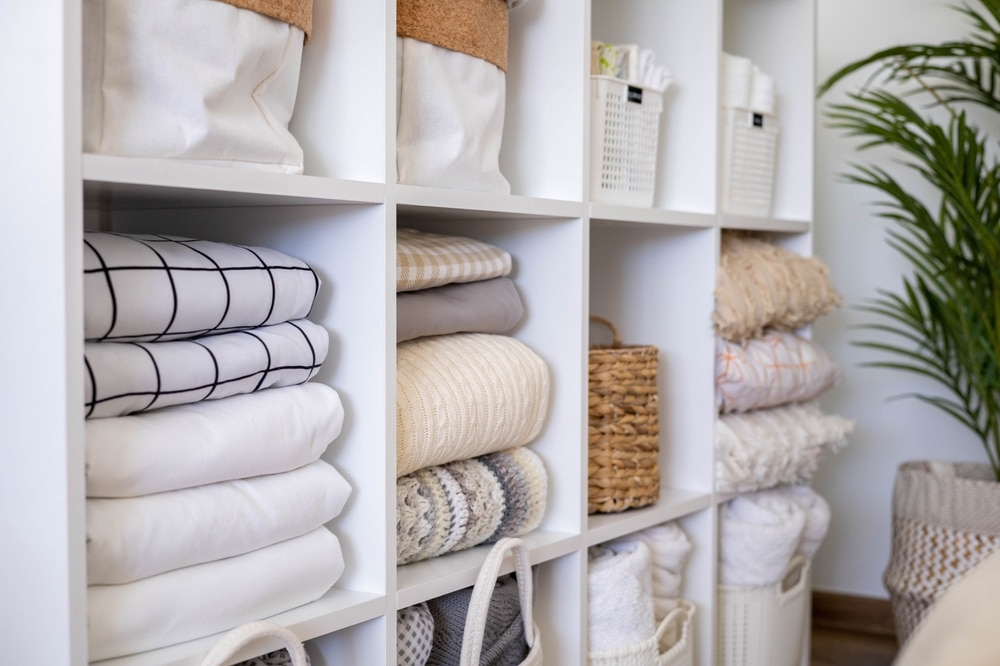
Organization isn’t about perfection. In fact, organized homes often look a little lived-in. But that mess doesn’t spread or linger in the same way, because there’s a system underneath it. When something is used, it has an obvious place to return to. When clutter appears, it’s contained rather than chaotic.
The biggest difference is that organization reduces decision-making. You don’t have to think about where things go or how to reset a room. The structure is already doing that work for you.
Why a Tidy Home Can Still Feel Stressful
Many people have a tidy home that somehow still feels overwhelming. That’s usually because tidiness is being maintained through effort rather than support. You’re relying on discipline instead of design. When the system requires you to constantly override your natural habits, stress builds quietly over time.
A tidy home often hides problems instead of solving them. Items are shoved into drawers, closets, or baskets without a clear system. This keeps things looking neat temporarily, but it makes daily life harder. You spend more time searching, reorganizing, or redoing work you’ve already done.
This is why tidiness alone rarely lasts. It looks good, but it doesn’t stick, because it isn’t aligned with how you actually live.
Why Organized Homes Don’t Need to Be Perfect
One of the biggest myths about organization is that it leads to sterile, overly controlled spaces. In reality, the opposite is often true. An organized home can handle mess because it’s designed for it. There’s room for imperfection built into the system.
When your home is organized, you don’t panic when things get a little chaotic. You know that resetting the space will be easy because everything has a place that makes sense. This confidence removes a huge amount of background stress, even if the home isn’t always perfectly tidy.
An organized home also adapts better to change. As routines shift or life gets busier, the system can flex instead of breaking. That flexibility is what makes organization sustainable long-term.
The Role of Habits in Tidiness and Organization
Tidiness relies heavily on habits like constantly putting things away and cleaning up as you go. Organization supports habits instead of demanding them. When storage matches behavior, habits form naturally without effort.
For example, if your keys always end up on the same surface, a tidy approach would involve repeatedly moving them somewhere else. An organized approach would involve creating a home for the keys exactly where they already land. The behavior stays the same, but the outcome improves.
This is why organized homes feel easier to maintain. They’re built around existing habits rather than ideal ones.
How a Tidy Home and an Organized One Feel Different Day to Day
Living in a tidy home often feels like maintaining a standard. There’s a subtle pressure to keep things looking a certain way, and when they don’t, it feels like failure. Living in an organized home feels more forgiving. You know mess is temporary and manageable.

In a tidy home, small disruptions feel bigger. In an organized home, they’re absorbed by the system. That difference shows up in how often you feel the need to clean, reset, or start over.
Over time, this affects your relationship with your space. A tidy home can feel like something you manage. An organized home feels like something that supports you.
Why We’re Taught to Aim for Tidiness First
Tidiness is easier to teach and easier to market. It’s visible, photogenic, and immediately rewarding. Organization takes longer to explain and doesn’t always look impressive from the outside. But what’s visible isn’t always what’s useful.
Social expectations also play a role. We’re often judged on how our homes look, not how they function. This encourages surface-level solutions rather than deeper ones. As a result, many people spend years chasing a tidy home without ever experiencing what true organization feels like.
Once you understand the difference, it becomes easier to shift priorities without guilt.
How Organization Naturally Leads to a Tidy Home
Here’s the part that surprises most people: when a home is truly organized, tidiness becomes much easier. You don’t have to work as hard to keep things looking neat because the system does most of the work for you.
When items are easy to put away, they actually get put away. When clutter has a designated place, it doesn’t spread. Tidiness becomes a side effect rather than a goal.
This is why organized homes often look tidy even when no one is actively trying to keep them that way.
Rethinking What You Want From Your Home
If you’ve been aiming for a tidy home and feeling frustrated, it might be time to ask a different question. Instead of asking how to keep things neat, ask how to make your home easier to live in. That shift changes everything.
Organization is about reducing effort, not increasing control. It’s about creating systems that work on your worst days, not just your best ones. When your home supports you consistently, the pressure to constantly tidy up fades naturally.
Final Thoughts: Tidy Is a Look, Organized Is a System
A tidy home is something you create. An organized home is something you build. One relies on constant action, the other on thoughtful structure. Both have value, but only one is sustainable without stress.
When you stop chasing tidiness and start focusing on organization, your home becomes calmer, more forgiving, and easier to maintain. The mess doesn’t disappear completely—but it stops controlling how you feel.
And once you experience the difference, it’s hard to go back.