
Most people don’t hate cleaning because it’s hard. They hate it because it feels inefficient. You start with one thing, get distracted by another, bounce between rooms, and somehow spend an entire afternoon cleaning without ever feeling finished. By the end, you’re tired, annoyed, and wondering how your home still doesn’t look that clean. This is exactly where the problem usually lives—not in effort, but in the cleaning order.
Cleaning without a clear order is like grocery shopping without a list. You’ll still get food, but you’ll waste time, energy, and patience along the way. A smart cleaning order doesn’t mean cleaning more or faster. It means cleaning once, instead of accidentally redoing the same work over and over.
When you follow the right cleaning order, everything suddenly clicks. Less backtracking. Less double work. Less of that “why am I still doing this?” feeling. And once you experience it, it’s hard to go back.
Why Cleaning Feels Slower Than It Should
Cleaning often feels time-consuming because most people clean reactively. You notice a mess, deal with it, then notice another one, then another. This creates a scattered workflow where you’re constantly switching tasks and rooms. Every switch costs mental energy, and over time that adds up more than the cleaning itself.
Another issue is cleaning things in the wrong sequence. Wiping surfaces before dealing with dust, vacuuming before tidying, or cleaning floors before countertops almost guarantees you’ll have to redo something later. That repetition is exhausting, and it’s one of the biggest reasons cleaning feels never-ending.
A proper cleaning order removes this friction. It creates momentum instead of resistance and turns cleaning into a series of logical steps instead of a chaotic loop.
What a “Good” Cleaning Order Actually Does
A good cleaning order works with gravity, movement, and habit instead of fighting them. It assumes that dirt falls downward, clutter spreads outward, and your energy drops as time passes. When you clean in the right order, you use these realities to your advantage.
The best cleaning order also reduces decision-making. You’re not constantly asking yourself what to clean next. The sequence answers that for you. That alone saves time, because deciding what to do is often more tiring than doing it.
Most importantly, an effective cleaning order ensures that once something is cleaned, it stays clean for the rest of the session. That’s the real time-saver.
Start With Decluttering, Not Cleaning
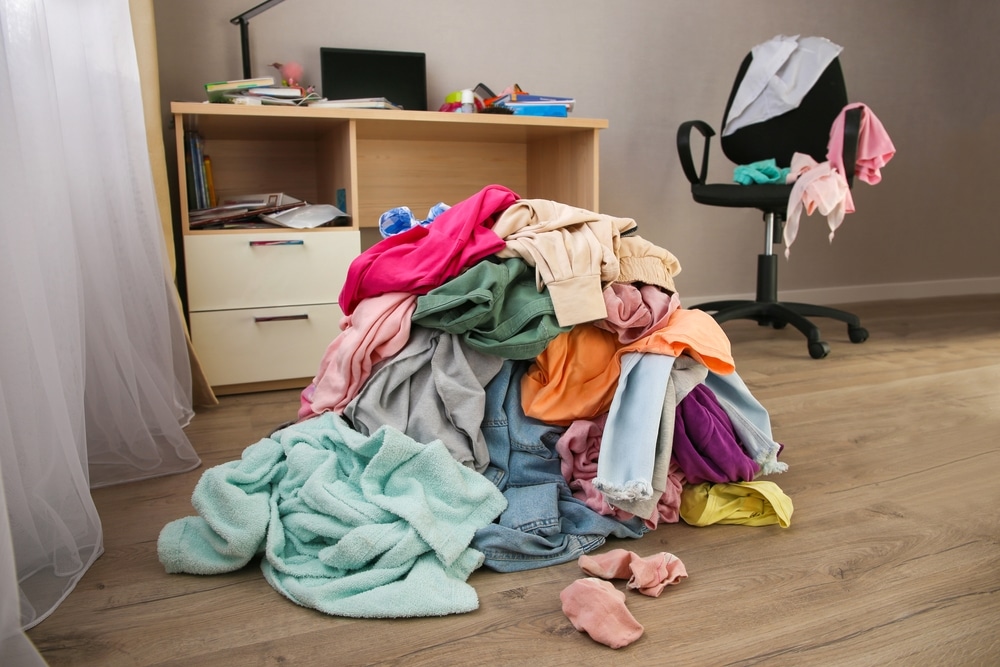
This is where most people go wrong immediately. They grab a cloth or vacuum before dealing with the stuff that’s in the way. Cleaning around clutter feels productive, but it slows everything down. You’re wiping surfaces that are half-covered, moving items repeatedly, and mentally tracking what still needs to be put away.

Starting with decluttering doesn’t mean organizing your entire home. It means removing obstacles. Anything that doesn’t belong in the room you’re cleaning should leave the room before you start wiping, scrubbing, or vacuuming. This clears your path and prevents you from cleaning the same area twice.
In the correct cleaning order, decluttering is always first because it unlocks everything that comes after.
Clean From Top to Bottom (Yes, It Really Matters)
Gravity is undefeated, and cleaning order should respect that. Dust, crumbs, and debris fall downward whether you want them to or not. When you clean lower surfaces first, you’re setting yourself up to redo them later.
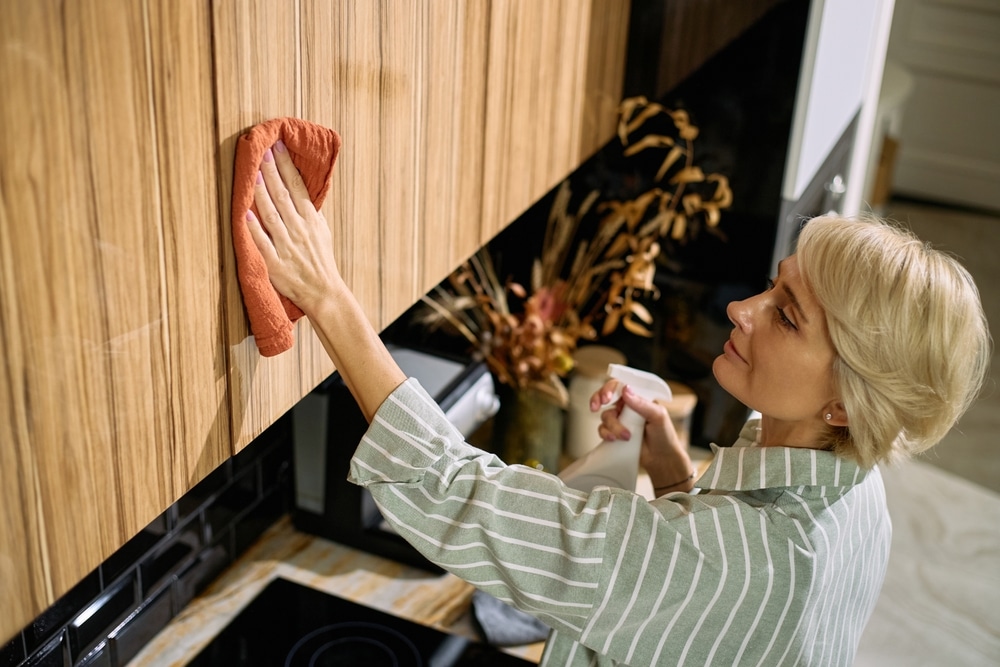
The most efficient cleaning order always starts higher up. Shelves, light fixtures, cabinet tops, and wall-mounted items come before countertops, furniture, and floors. This way, anything that falls gets dealt with naturally as you move down.
This single adjustment often cuts cleaning time dramatically, because it eliminates rework. You clean each surface once, and that’s it.
Dry Tasks Before Wet Tasks
Another overlooked rule of an effective cleaning order is separating dry tasks from wet ones. Dusting, sweeping, and vacuuming should always happen before wiping, mopping, or scrubbing. If you introduce moisture too early, you risk turning dust into grime and spreading mess instead of removing it.
Dry cleaning removes loose debris efficiently. Wet cleaning finishes the job. When these steps are reversed, cleaning becomes slower and more frustrating.
Following this order also keeps tools cleaner. You won’t be rinsing cloths constantly or spreading dirt with wet wipes, which saves both time and energy.
Work Room by Room, Not Task by Task
Many people clean by task instead of by room. They dust everywhere, then vacuum everywhere, then wipe everywhere. While this sounds efficient, it often leads to wasted movement and mental fatigue.
A smarter cleaning order focuses on completing one room at a time. This creates a sense of progress and prevents half-finished spaces from lingering. When a room is done, it’s done. That psychological closure matters more than most people realize.
Room-by-room cleaning also reduces backtracking. You’re not carrying supplies all over the house or revisiting spaces multiple times. Everything you need stays with you until the room is finished.
Save Floors for Last (Always)
Floors are the final step in any time-saving cleaning order. They collect everything—dust, crumbs, hair, and debris from every other surface. Cleaning them too early guarantees they’ll get dirty again before you’re finished.
When floors are done last, they stay clean. You’re not walking over them while dusting or tracking debris across freshly mopped surfaces. This one rule alone can shave a surprising amount of time off your routine.
It also makes cleaning feel more rewarding. Ending with clean floors creates a strong visual payoff, which helps the entire home feel finished.
The Cleaning Order That Actually Works
When you put it all together, the most efficient cleaning order follows a simple logic. You remove clutter first so nothing gets in your way. You clean high surfaces before low ones so gravity works for you. You handle dry messes before wet ones so you’re not spreading dirt. You finish rooms completely instead of jumping around. And you always save floors for last.
This order isn’t about perfection or deep cleaning. It’s about flow. When cleaning flows, it takes less time, less energy, and far less mental effort.
Why This Cleaning Order Feels Easier
The reason this cleaning order saves time isn’t just physical—it’s mental. You’re no longer negotiating with yourself about what to do next. The structure carries you through the process.
There’s also less frustration because progress is visible. Rooms get completed. Mess doesn’t come back. You don’t feel like you’re undoing your own work. That sense of efficiency changes how cleaning feels emotionally.
When cleaning feels easier, it happens more often and with less resistance. That alone can dramatically reduce how much time you spend cleaning overall.
Common Cleaning Habits That Waste Time
One of the biggest time-wasters is multitasking while cleaning. Jumping between tasks feels productive, but it actually slows you down by breaking focus and increasing decision fatigue. A clear cleaning order removes the temptation to bounce around.
Another common issue is over-cleaning certain areas while neglecting others. When there’s no order, it’s easy to spend too much time on one spot and rush the rest. A structured approach naturally balances effort.
Cleaning without a clear end point is another trap. When you don’t know what “done” looks like, cleaning expands to fill the time you have. A defined order creates a natural stopping point.
How to Use This Cleaning Order on Busy Days
You don’t need to follow the full cleaning order every time. On busy days, you can apply the same logic in a smaller scope. Declutter quickly, clean top to bottom, handle dry messes first, and finish with floors if possible.
Even partial adherence to the cleaning order saves time because it prevents rework. You’re still cleaning intelligently, even if you’re cleaning less.
This flexibility is what makes the system sustainable. It works on full cleaning days and quick resets alike.
Why Order Matters More Than Speed
Trying to clean faster rarely works. Speed increases mistakes, rework, and frustration. Order, on the other hand, naturally increases efficiency without pressure.
When you clean in the right order, speed becomes a side effect. You move smoothly, make fewer decisions, and finish sooner without trying to rush.
This is why professional cleaners focus so much on sequence. It’s not about working harder—it’s about working logically.
Clean Once, Not Twice
The right cleaning order doesn’t make cleaning fun, but it does make it fair. You spend the time once, see the results, and move on with your day instead of feeling stuck in an endless loop.
If cleaning has always felt like it takes longer than it should, the solution probably isn’t more effort or better products. It’s a better order.
Clean smarter, not harder. Let gravity help you. Let structure carry you. And most importantly, let “done” actually mean done.
That’s not a cleaning hack. That’s just a slightly genius way to clean.