


Small bedrooms don’t fail because there isn’t enough space. They fail because the space that does exist isn’t working hard enough. And nowhere is that more obvious than the closet. When shelves overflow, collapse into piles, or become black holes of forgotten items, the entire room feels tighter and more chaotic than it actually is. Learning how to organize bedroom closet shelves properly is one of the fastest ways to make a small bedroom feel calmer, larger, and easier to live in—without changing the footprint at all.
Closet shelves aren’t just storage. They’re decision points. When they’re unclear, clutter spreads outward into the room. When they’re set up intentionally, they quietly absorb chaos and restore balance. This is especially important in small bedrooms, where every square meter counts.
This article focuses on organizing closet shelves in a way that works with limited space, real habits, and daily use—without turning the closet into a rigid system that falls apart after a week.
Why Closet Shelves Matter More in Small Bedrooms
In a large bedroom, clutter has places to hide. In a small bedroom, it doesn’t. Overflow from the closet ends up on chairs, floors, or beds almost immediately. That’s why closet organization has an outsized effect in compact spaces.
When closet shelves work well, the bedroom feels lighter even if nothing else changes. When they don’t, the room feels cramped no matter how tidy the rest of the space is. Organizing bedroom closet shelves properly is less about storage and more about pressure relief.
The closet either absorbs disorder—or it exports it.
The Most Common Closet Shelf Problem
The biggest issue with closet shelves isn’t lack of space. It’s lack of clarity. Shelves often become vague holding zones where items pile up without clear purpose.
When shelves don’t have defined roles, they fill based on convenience instead of logic. Items stack on top of each other, visibility disappears, and eventually nothing feels usable. At that point, people stop trusting the closet and start leaving things out.
Organizing bedroom closet shelves starts with deciding what each shelf is actually for.
Why “Just Stack It” Never Works Long-Term
Stacking feels efficient, but in small closets it’s one of the fastest paths to chaos. When items are stacked deeply, access becomes difficult. The bottom layers are forgotten. The top layers become unstable.
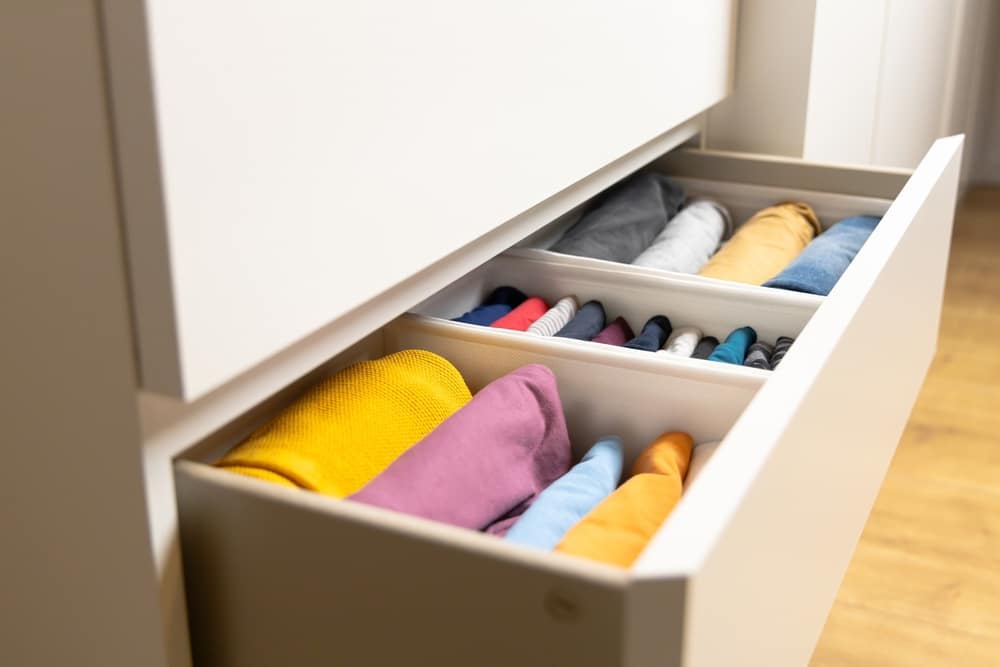
Over time, stacks collapse, get reshuffled, or turn into mixed piles that require effort to manage. In small bedrooms, that effort rarely happens consistently.
Shelf organization that relies heavily on stacking usually fails because it demands too much precision for daily life.
Organizing by Frequency, Not Category
One of the most effective ways to organize bedroom closet shelves is by frequency of use rather than by type. Items used weekly should never compete with items used seasonally.
Daily or weekly items deserve eye-level or easily reachable shelves. Less-used items can live higher or lower without disrupting the flow. When frequency guides placement, the closet becomes intuitive instead of frustrating.
This approach reduces decision fatigue and keeps shelves from becoming overcrowded.
Why Visibility Is Everything in a Small Closet
If you can’t see it, you won’t use it. And if you don’t use it, it becomes clutter. In small bedroom closets, visibility is more important than maximizing storage density.
Closet shelves that allow you to see what’s there stay organized longer. When everything is visible at a glance, items return to their place naturally.
Organizing bedroom closet shelves for visibility often means storing fewer items per shelf—but gaining far more usability.
Letting Shelves Breathe Prevents Overflow
One of the biggest mindset shifts in organizing small closets is accepting that not every inch of shelf space needs to be filled. Empty space is not wasted space. It’s functional space.
Shelves that are packed edge-to-edge feel full immediately. Shelves with breathing room stay usable longer and are easier to reset when things shift.
In small bedrooms, a little empty space does more work than an extra stack ever could.
Why Mixing Categories Creates Hidden Clutter
Closet shelves often fail because unrelated items get mixed together. Clothing, accessories, linens, bags, and random items share space simply because there’s room.
This mixing makes shelves harder to maintain because nothing has a clear boundary. When one category expands, it pushes into another, and the shelf becomes unstable.

Organizing bedroom closet shelves works best when each shelf has a single purpose—or at least a clearly dominant one.
Using Shelf Height Intentionally
Shelf height is often ignored, but it plays a major role in functionality. Tall shelves invite stacking. Shallow shelves limit flexibility. Uneven spacing can create awkward zones that never quite work.
In small closets, shelves should match the items they hold. Shelves that are too tall encourage disorder. Shelves that are too short waste potential.
When shelf height aligns with item height, organization feels natural instead of forced.
Why “Just in Case” Items Ruin Closet Shelves
Small bedrooms don’t have room for indefinite storage. Items kept “just in case” quietly consume shelf space while offering little value.
These items often block access to things you actually use, making the closet feel crowded even when it’s not technically full. Over time, they become invisible clutter.
Organizing bedroom closet shelves requires being honest about what deserves prime space—and what doesn’t.
Seasonal Rotation Is Not Optional in Small Bedrooms
Closets in small bedrooms cannot support everything year-round. Trying to store all seasons at once is one of the fastest ways to overwhelm shelves.
Seasonal rotation isn’t about perfection—it’s about relieving pressure. Removing off-season items instantly frees space and makes shelves easier to manage.
This single habit often solves more organization problems than any container or divider ever could.
Why Over-Organizing Backfires
Adding too many dividers, bins, or systems can make shelves harder to use instead of easier. When organization becomes rigid, it stops adapting to real life.
Small bedroom closets benefit from simple, flexible organization that can shift as needs change. Over-structuring often leads to abandonment.
The best shelf organization feels obvious, not clever.
How Shelf Organization Affects the Rest of the Bedroom
When closet shelves work, the bedroom stays cleaner with less effort. Items go back where they belong. Surfaces stay clearer. Floors stay open.
When shelves fail, the bedroom absorbs the overflow. Chairs become storage. Beds collect piles. The room feels permanently unfinished.
Organizing bedroom closet shelves isn’t a closet task—it’s a bedroom-wide solution.
The Role of Consistency Over Perfection
Closet organization doesn’t need to look perfect to work. It needs to be consistent. Items need to return to roughly the same place every time.
Consistency builds trust. When you trust the closet, you use it fully. When you don’t, you work around it—and clutter spreads.
Small bedrooms benefit more from consistency than from visual perfection.
Knowing When Shelves Are Working
You’ll know your closet shelves are organized properly when you stop thinking about them. Getting dressed feels easier. Putting things away feels automatic. The bedroom feels calmer without extra effort.

There’s no constant reshuffling. No mental negotiation about where things go.
That quiet ease is the real sign of success.
Common Closet Shelf Mistakes in Small Bedrooms
Common mistakes include storing too much on one shelf, mixing unrelated items, ignoring seasonal shifts, and prioritizing storage capacity over usability.
These mistakes aren’t about laziness—they’re about systems that don’t respect limited space.
Correcting them usually requires removing pressure, not adding structure.
Why Less Storage Often Works Better
In small bedrooms, less storage often leads to better organization. Fewer items mean clearer shelves. Clearer shelves mean easier habits.
Reducing what lives on closet shelves doesn’t make the room less functional—it makes it more usable.
Space works best when it’s not constantly at capacity.
Closet Shelves That Support Small Bedrooms
Organizing closet shelves in small bedrooms isn’t about fitting more in. It’s about letting the right things fit easily.
When shelves have clear roles, visible contents, and breathing room, they stop exporting clutter into the bedroom. The room feels lighter. The closet feels reliable.
Learning how to organize bedroom closet shelves is one of the most effective ways to improve a small bedroom without changing a single wall. Sometimes the biggest improvements come from making existing space work the way it was always meant to.