

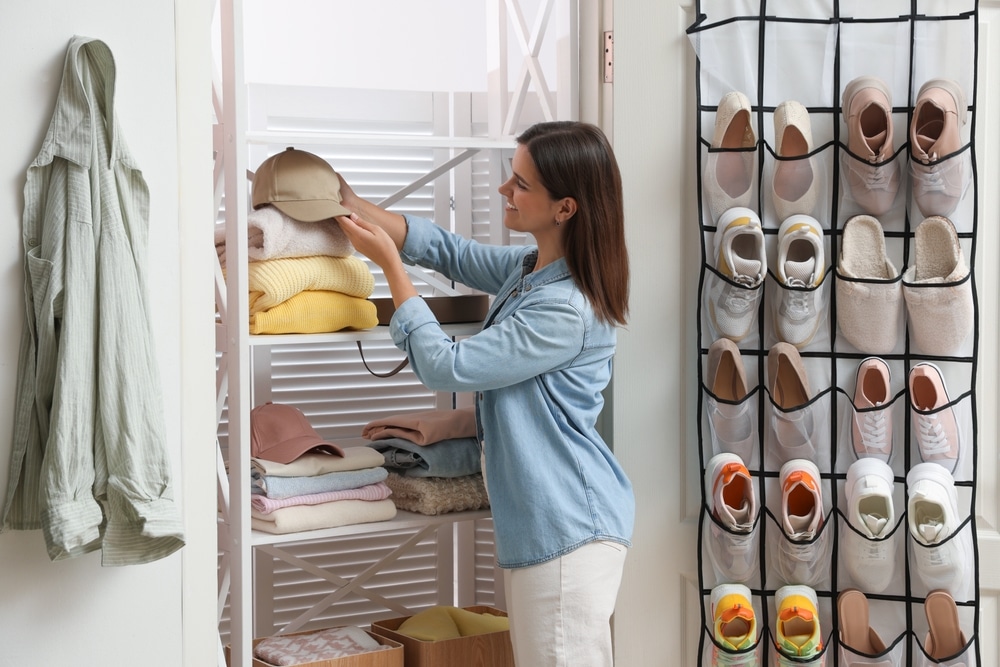
If you have ever opened your wardrobe and felt like everything was about to tumble out, you are not alone. A small closet can quickly turn into a chaotic space where clothes, shoes, and random items compete for every inch. The good news is that you do not need a bigger closet to make it work. With smart closet shelf organization, even the tiniest shelves can become powerful storage zones. By rethinking how you use vertical space, containers, and layout, you can transform a cramped closet into a streamlined system that actually makes your daily routine easier.
The Basics of closet shelf organization
When space is limited, every decision matters. Good closet shelf organization starts with understanding what you actually use. Before buying bins or rearranging piles, take everything off your shelves. This gives you a clear view of how much space you truly have and forces you to sort your belongings into categories.
One of the biggest mistakes people make with closet shelf organization is storing items randomly. Shelves should not be treated as catch all surfaces. Instead, assign each shelf a purpose. For example, one shelf can be dedicated to folded sweaters, another to jeans, and another to bags or accessories. Grouping similar items together makes it easier to maintain order over time.
Another key principle of closet shelf organization is visibility. If you cannot see it, you probably will not use it. Keep frequently worn items at eye level. Reserve higher shelves for seasonal or rarely used pieces. Lower shelves can hold heavier items or storage bins. By matching shelf height with item type, you reduce clutter and prevent stacks from toppling over.
Using Vertical Space to Your Advantage
Small closets often waste vertical space. Shelves may be too far apart, leaving empty air above neatly folded clothes. Smart closet shelf organization focuses on maximizing height without creating unstable piles.
Shelf dividers are a simple solution. These vertical separators keep stacks of clothing from collapsing into each other. When sweaters have their own section, they are less likely to slide around. This makes closet shelf organization much easier to maintain week after week.
You can also add stackable bins to create layers within a single shelf. Clear bins are especially helpful because they let you see what is inside without digging. This approach works well for accessories like scarves, belts, or workout gear. Instead of spreading these items loosely across a shelf, you contain them in defined zones.
Another vertical trick involves adding small risers. These are commonly used in kitchens but work beautifully in closets. By placing a riser on a shelf, you effectively double your usable surface. Shoes, clutches, or folded t shirts can sit on different levels, improving both access and closet shelf organization.
Folding Smarter, Not Just Smaller
Folding techniques can make a surprising difference. Bulky folds eat up precious space, while compact, consistent folds allow you to fit more items neatly. Improving your folding method is a core part of effective closet shelf organization.
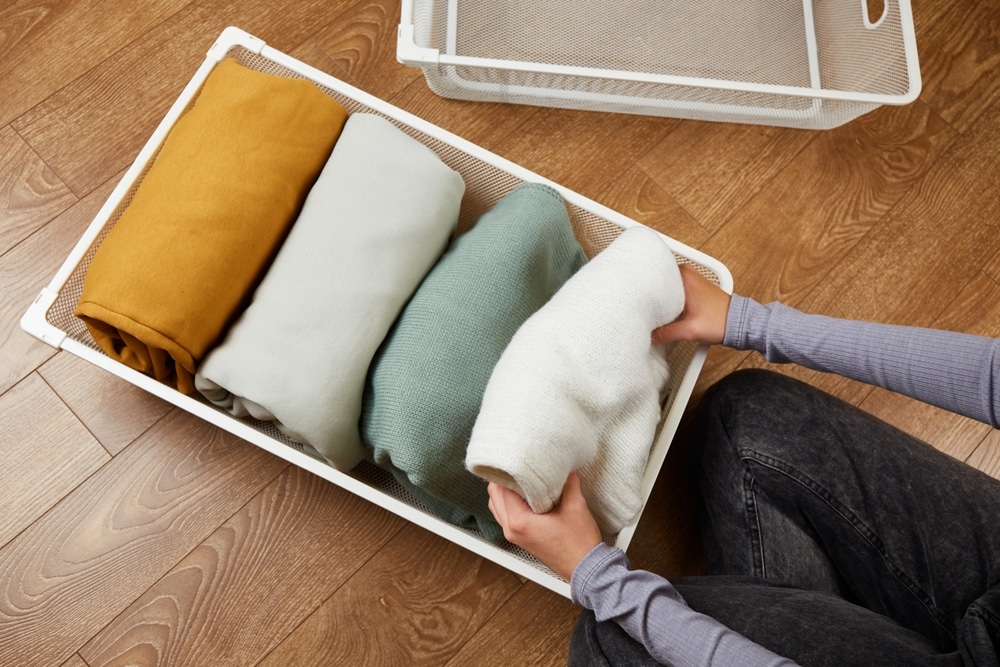
For example, standing clothes upright rather than stacking them flat can help. This method, often associated with minimalist organizing trends, allows you to see each item at a glance. Instead of lifting a pile to find one shirt, you simply pull it out. This keeps surrounding clothes undisturbed and supports long term closet shelf organization.
Consistency matters more than perfection. Choose one folding style for each clothing category and stick with it. When all sweaters are folded to the same width and height, they stack more securely. This uniformity reduces wasted space and creates a visually calm shelf.
It is also helpful to limit how high you stack items. Even if you can physically pile sweaters to the top of the shelf, doing so increases the chance of collapse. A better approach is to divide tall stacks into two smaller ones or use bins. Stable stacks are essential for sustainable closet shelf organization.

Creating Zones for Different Categories
Think of your closet shelves as real estate. Each square inch should serve a purpose. Creating clear zones is one of the most powerful closet shelf organization strategies you can use.
Start by dividing items into broad categories such as work clothes, casual wear, formal outfits, and seasonal pieces. Then assign shelves based on how often you use each category. Daily essentials deserve prime shelf space. Special occasion items can live higher up or in labeled containers.
Accessories often create the most clutter. Without a defined system, they spread across shelves and mix with clothing. Dedicate a specific shelf or portion of a shelf to accessories only. Small boxes or trays can separate sunglasses, watches, and jewelry. This targeted approach strengthens your overall closet shelf organization by preventing cross category chaos.
Seasonal rotation is another smart move. If it is summer, heavy coats and thick scarves do not need to occupy central shelf space. Store them in labeled bins on the highest shelf or even outside the closet if possible. Rotating items twice a year keeps your shelves focused on what you actually need, improving closet shelf organization throughout the year.
Maintaining the System Over Time
Even the best setup can fall apart without maintenance. The secret to lasting closet shelf organization is building habits that support your system.
First, adopt a one in, one out rule. When you bring home a new sweater, consider donating or removing an old one. This prevents shelves from becoming overcrowded again. Limited space naturally encourages mindful shopping.
Second, schedule small reset sessions. Once a month, spend ten minutes straightening stacks and returning misplaced items to their zones. Regular touch ups keep closet shelf organization from slipping into disorder.
Labels can also help maintain structure, especially if you share your closet with someone else. Clear labels on bins or shelf edges act as gentle reminders of where things belong. This reduces guesswork and makes it easier for everyone to follow the system.
Finally, be realistic about your space. No amount of closet shelf organization can compensate for keeping far more items than your closet can hold. If shelves are constantly overflowing, it may be time to declutter more deeply. Letting go of unused pieces creates breathing room and makes your system far more effective.
Small Changes, Big Impact
You do not need a complete renovation to improve your closet. Sometimes the smallest adjustments have the greatest impact. Moving one shelf slightly lower to reduce wasted space or adding a few matching bins can dramatically enhance closet shelf organization.
Lighting is another overlooked factor. A well lit closet makes it easier to see and maintain order. Stick on battery powered lights are inexpensive and simple to install. When you can clearly see your shelves, you are more likely to keep them tidy.
It is also helpful to step back and evaluate your setup after a few weeks. Are certain shelves still messy? Are some items hard to reach? Tweak your layout as needed. Effective closet shelf organization is not a one time project but an evolving process that adapts to your habits.
Remember that perfection is not the goal. The aim is functionality. If your shelves allow you to find what you need quickly and put it back easily, your system is working. Over time, these small efficiencies add up, saving you minutes each day and reducing daily stress.
A small closet does not have to feel limiting. With thoughtful planning, strategic use of vertical space, smarter folding, and consistent maintenance, you can turn even the tightest shelves into reliable storage tools. The key is approaching closet shelf organization as a practical system rather than a quick fix. When each shelf has a clear purpose and every item has a defined home, your closet becomes less of a frustration and more of a support system for your daily life. By committing to simple habits and periodic resets, you ensure that your closet shelf organization continues to work hard for you long after the initial makeover is done.
Do you want more amazing tips to reorganize your home? Then visit our home organization page right here