

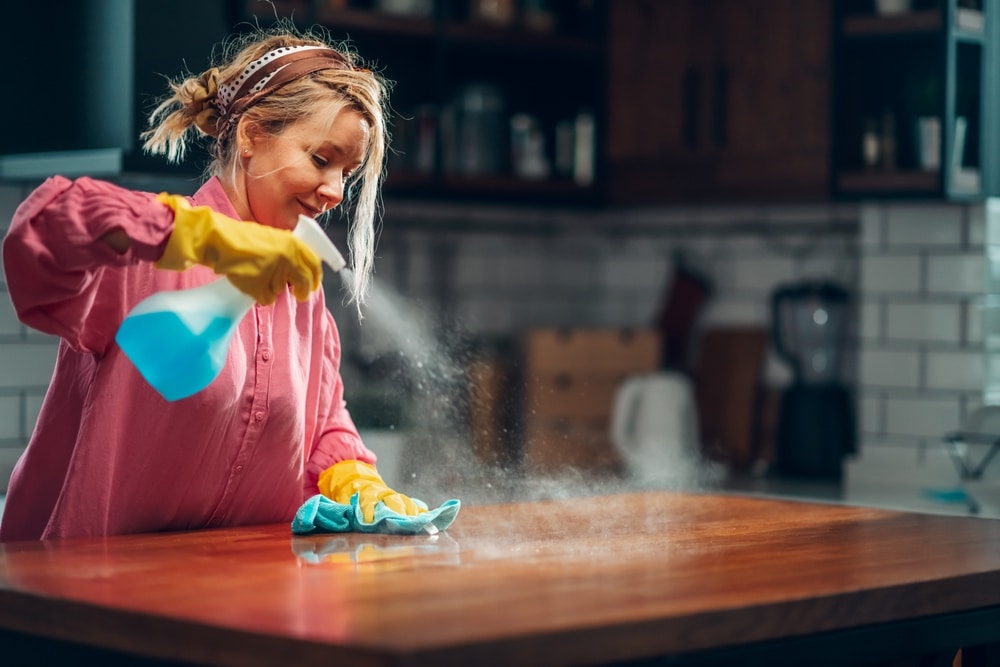
Kitchen countertops take more abuse than almost any other surface in the home. They handle food prep, spills, heat, moisture, sharp objects, and daily wiping—often all within a few hours. Because they’re used so constantly, many people try to clean kitchen countertops quickly and aggressively, assuming tougher cleaning equals better results. Unfortunately, that approach is one of the fastest ways to damage them.
Most countertop damage doesn’t happen all at once. It happens slowly, through small habits that feel harmless: the wrong cleaner, the wrong sponge, too much scrubbing, or leaving something sitting just a bit too long. Understanding how to clean your countertops properly isn’t about being delicate—it’s about being smart so the surface lasts and continues to look good over time.
Why Countertops Get Damaged Even When They’re Cleaned Regularly
Many countertop surfaces are designed to be durable, but durability doesn’t mean indestructible. The most common damage comes from repeated exposure to harsh chemicals, abrasives, and moisture rather than from accidents.
When people clean kitchen countertops with whatever product is nearby, they often don’t realize they’re slowly stripping finishes, dulling surfaces, or creating microscopic scratches. These tiny changes add up, making countertops more prone to stains, discoloration, and wear.
Ironically, the more aggressively people clean, the worse the surface often looks over time.
One Cleaning Method Does Not Fit All Countertops
Different countertop materials react very differently to cleaning products and techniques. What works well on one surface can permanently damage another.
Stone surfaces, for example, are often sensitive to acidic or abrasive cleaners. Laminate can scratch easily. Wood needs protection from moisture. Even engineered surfaces can lose their finish if cleaned incorrectly.
This is why “universal” cleaning advice often causes problems. Learning how to clean kitchen countertops safely starts with understanding that the surface itself matters more than the product’s marketing claims.
Why Harsh Cleaners Are a Bigger Problem Than Dirt
Strong chemical cleaners are often marketed as powerful solutions for kitchen messes, but power isn’t always helpful. Many harsh cleaners break down protective finishes or react with the countertop material itself.
Over time, this leads to dullness, etching, or uneven coloring. Once the surface is compromised, it becomes harder to keep clean because stains and residue cling more easily.
Gentler cleaning, done consistently, protects the surface and actually keeps countertops looking cleaner in the long run.
The Hidden Damage Caused by Abrasive Tools
It’s not just what you clean with—it’s how you clean. Rough sponges, scouring pads, and abrasive powders create tiny scratches that aren’t always visible immediately. These scratches trap dirt, grease, and bacteria, making the surface look dirty faster.
Once that cycle starts, people often scrub harder, which creates more damage. This is one of the most common reasons countertops lose their smooth, clean appearance even when they’re wiped daily.
Using softer tools helps maintain the surface’s integrity and keeps cleaning effective without extra effort.
Moisture: The Slowest, Quietest Threat
Moisture damage doesn’t always look dramatic. It often starts with subtle changes: swelling, darkened edges, cloudy patches, or weakened seams. Leaving water, spills, or damp cloths sitting on countertops—especially around seams or edges—can slowly cause deterioration.
This is particularly true for wood, laminate, and areas near sinks. Even surfaces labeled “water-resistant” benefit from being dried after cleaning.
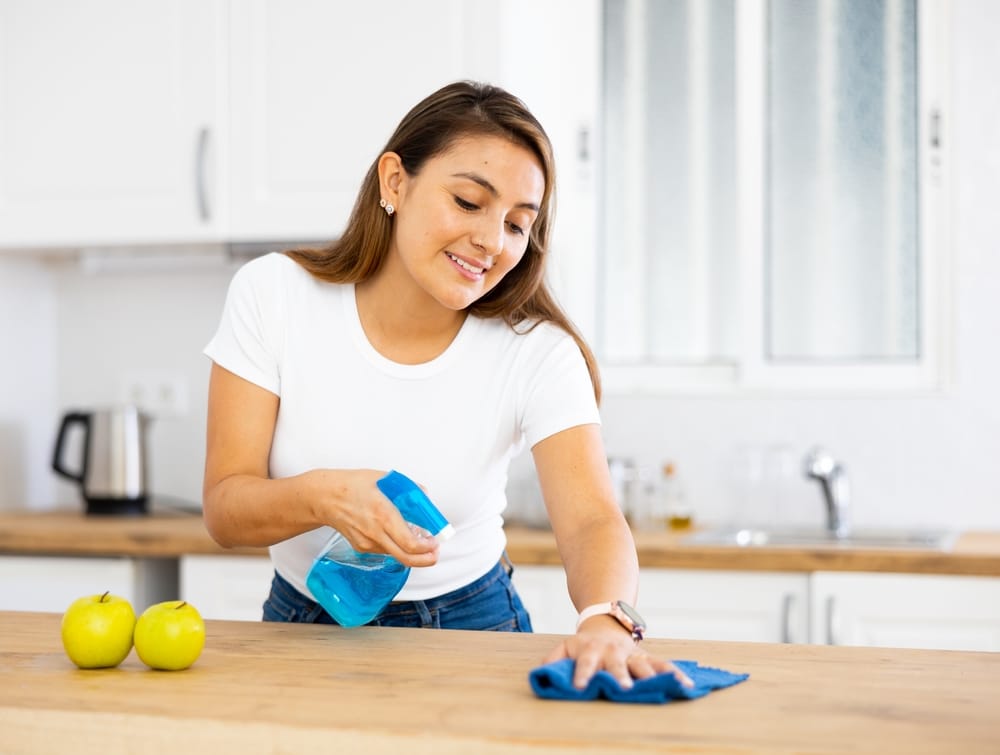
When you clean kitchen countertops, removing moisture is just as important as removing dirt.
Heat and Cleaning: A Risky Combination
Many people don’t connect heat with cleaning damage, but they often overlap. Hot pans, appliances, or even very hot water used during cleaning can stress countertop materials.
Heat can weaken adhesives, cause expansion, or discolor finishes. Cleaning with extremely hot water right after cooking increases this risk, especially on laminated or sealed surfaces.
Allowing surfaces to cool before cleaning helps preserve their structure and finish.
Why “Natural” Cleaners Can Still Cause Damage
Natural doesn’t automatically mean safe. Vinegar, lemon juice, and baking soda are commonly recommended as eco-friendly cleaners, but they can be problematic for many countertop materials.
Acids can etch stone. Baking soda can act as a mild abrasive. Essential oils can leave residues or interact with finishes.
Using natural products thoughtfully—and understanding where they’re appropriate—is essential if you want to clean kitchen countertops without unintended damage.
Cleaning for Maintenance vs. Cleaning for Spills
Not all cleaning serves the same purpose. Daily maintenance cleaning should be gentle and focused on removing surface debris and light residue. Spill cleanup may require more targeted action, but still doesn’t need aggression.
Treating every wipe-down like a deep clean increases wear unnecessarily. Separating routine cleaning from problem cleanup helps extend the life of your countertops.
Consistency matters more than intensity.
How Residue Creates the Illusion of Dirt
Sometimes countertops look dirty not because they are dirty, but because cleaning products leave behind residue. Sticky or cloudy buildup attracts more dust and grime, making the surface feel perpetually unclean.
This often happens when too much product is used or when cleaners aren’t fully wiped away. Over time, residue dulls the surface and increases cleaning frequency.
Less product, used properly, usually results in a cleaner-looking countertop.
The Importance of Drying After Cleaning
Drying is one of the most overlooked steps when people clean kitchen countertops. Leaving surfaces wet invites water spots, streaks, and moisture-related damage.
A quick dry with a clean cloth not only protects the material but also improves how clean the countertop looks. It removes leftover residue and gives the surface a finished appearance.
This small step makes a big difference with minimal effort.
When Deep Cleaning Is Actually Necessary
Deep cleaning isn’t something countertops need daily. It’s best reserved for buildup, stains, or after particularly messy cooking sessions.
When deep cleaning is needed, choosing methods that match the surface material prevents damage while restoring appearance. Doing this occasionally is far safer than frequent aggressive cleaning.
Knowing when to stop is part of protecting your countertops.
How Proper Cleaning Extends Countertop Lifespan
Countertops that are cleaned gently and consistently age far better than those cleaned aggressively and inconsistently. The surface stays smoother, finishes last longer, and stains are less likely to set in.
Proper cleaning also reduces the need for repairs or refinishing later, saving money and effort over time.
When you clean kitchen countertops correctly, you’re not just cleaning—you’re maintaining one of the most used surfaces in your home.
Clean Them Smarter, Not Harder
Cleaning kitchen countertops doesn’t require harsh products, heavy scrubbing, or constant deep cleaning. It requires understanding the surface, using gentle methods, and paying attention to small habits that add up over time.
A countertop that’s treated with care stays easier to clean, looks better longer, and feels more pleasant to use every day. The goal isn’t spotless perfection. It’s long-term durability with minimal stress.
When you clean smarter instead of harder, your countertops—and your kitchen—benefit quietly and consistently.