
There’s a particular kind of dread that hits when you’re already halfway through a recipe and you can’t find the cumin. Or the rice. Or that one specific can of tomatoes you definitely bought last week. You stand there, oven preheating, onions burning, rummaging through a shelf that’s somehow swallowed half your kitchen. If this sounds painfully familiar, it’s not because you’re disorganized — it’s because your pantry is fighting against you. Good pantry organization ideas don’t just make your kitchen look pretty for Instagram. They genuinely make cooking feel easier, faster, and a lot less stressful.
The best part? You don’t need to spend hundreds on matching glass jars or copy a Pinterest pantry to get there. You just need a system that actually works for the way you cook. Let’s walk through it.
Why Your Pantry Is Probably Sabotaging You
Most pantries become disasters slowly, not suddenly. You unload groceries when you’re tired, shove things wherever they fit, and over months it turns into a cave where pasta lives next to canned beans which live next to a mystery jar of capers from 2022. The problem isn’t lack of space — it’s lack of structure.
Cooking gets harder when you can’t see what you have. You buy duplicates because you don’t know there’s already an open bag of rice. You forget about ingredients until they expire. You skip recipes because you “don’t have time to find everything.” Smart pantry organization ideas fix all of this by making everything visible, accessible, and predictable. When you know exactly where the soy sauce lives, you stop wasting mental energy on the search. That sounds small until you realize how many decisions cooking already requires.
Step One: Empty Everything Out
There’s no skipping this part. Pull every single item out of your pantry and put it on the counter or kitchen table. Yes, all of it. This serves three purposes.
First, you’ll discover what you actually own. Most people are shocked to find five half-open boxes of pasta or three identical jars of paprika. Second, you can wipe down the shelves, which they probably need. Third, you’ll see the actual scale of your pantry’s contents, which makes it possible to plan zones and containers properly.
While the pantry is empty, throw out anything expired. Be honest — that 2021 baking powder is not making your pancakes rise anymore. Donate unopened items you’ll never use. Combine duplicates. By the time you’re done, you’ll likely have 30-40% less stuff, and that alone is the foundation of every good organization system.
Step Two: Group by Category, Not by Shape
This is the single biggest mindset shift in any list of pantry organization ideas worth following. Most people group items by what they look like — all the cans together, all the boxes together, all the jars together. It looks tidy. It’s also almost useless when you’re cooking.
Group by category instead. Things you reach for together should live together. Some categories that work for most kitchens:
Baking — flour, sugar, baking powder, baking soda, vanilla, chocolate chips, sprinkles. Breakfast — cereal, oats, granola, peanut butter, honey, jam. Grains and pasta — rice, quinoa, pasta, lentils, couscous. Canned goods — tomatoes, beans, coconut milk, broth. Snacks — crackers, chips, nuts, granola bars. Cooking essentials — oils, vinegars, soy sauce, hot sauce. Spices — self-explanatory but worth its own zone.
When categories live together, cooking becomes a one-stop trip. You’re making pasta? Everything you need is in one zone. Baking cookies? One shelf. The mental shortcut this creates is genuinely the magic behind effective pantry organization ideas.
Step Three: Place Categories by How Often You Use Them
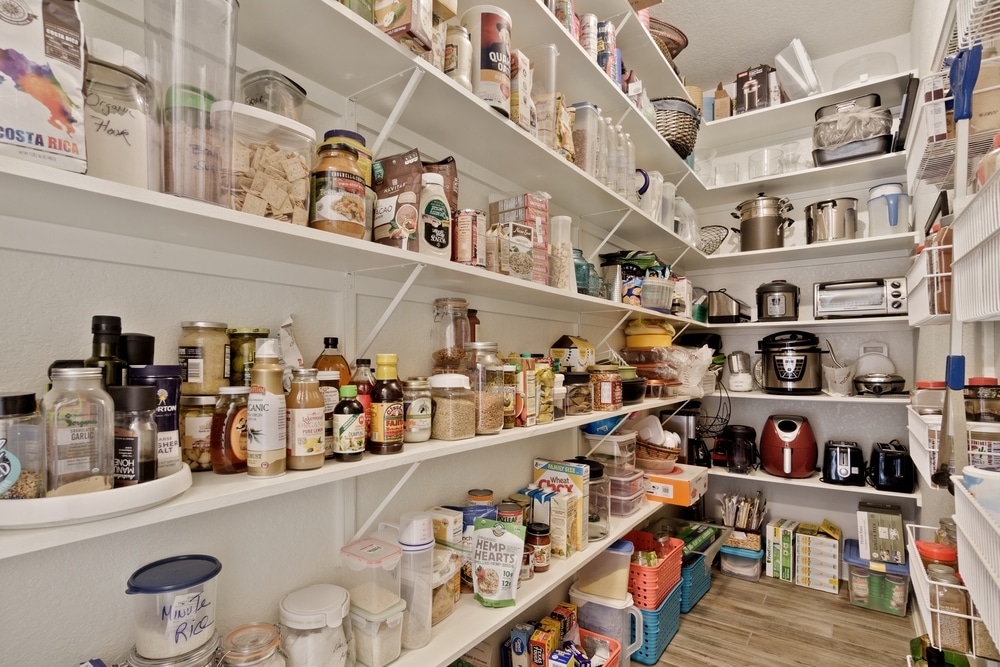
Now decide where each category lives. The rule is simple: the things you use daily go at eye level, the things you use weekly go just above or below, and the things you barely touch go on the highest or lowest shelves.
Frequently used items at eye level. Heavy items — flour bins, large oil bottles — on lower shelves where they’re stable and easy to lift. Holiday or specialty items — sprinkles for Christmas cookies, that one fancy mustard you bought for a dinner party — go up top.
This sounds obvious, but most people never think about it. They organize by what looks neat, not by what makes daily cooking easier. The best pantry organization ideas always prioritize workflow over aesthetics.
Step Four: Use Containers Strategically (Not Just Prettily)
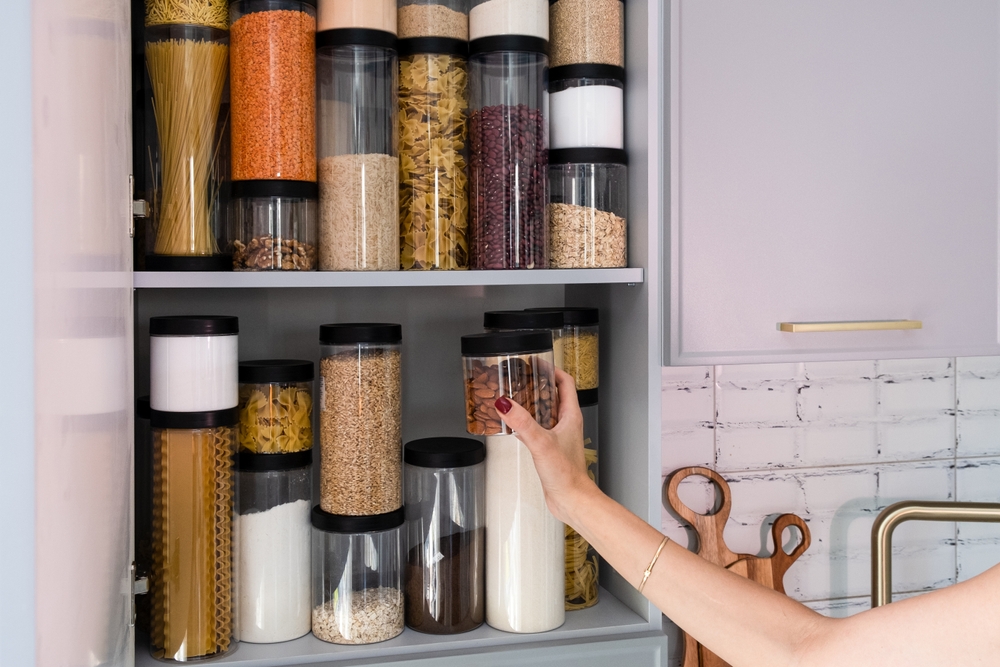
Now we get to the fun part. Containers genuinely help, but only if you’re thoughtful about them. The Pinterest fantasy of decanting everything into matching glass jars looks gorgeous and is mostly impractical for normal humans. Here’s what actually works.
Clear bins for grouped categories. A bin for snacks, a bin for breakfast items, a bin for baking. You pull out the whole bin when you need something from that category, and everything stays grouped. Clear is important — you want to see contents at a glance.
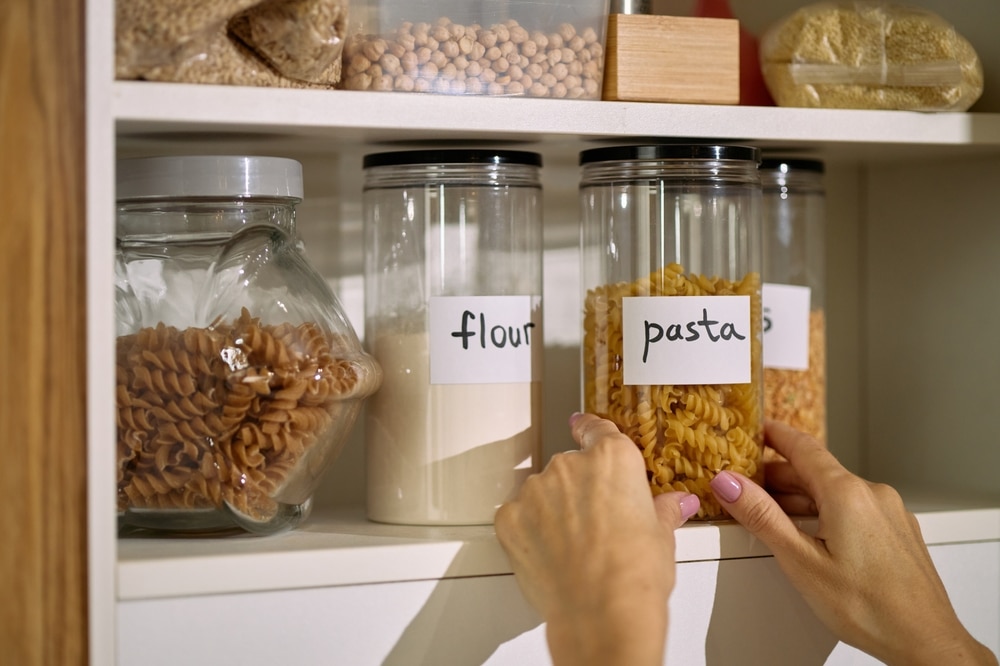
Pop-top or airtight containers for things you actually use often: flour, sugar, oats, rice, pasta, cereal. These keep food fresh, save space (cardboard boxes waste a lot of room), and make pouring easier. Don’t bother decanting things you only use occasionally — keeping the original packaging is fine.
Lazy Susans (turntables) for spices, oils, and condiments. These are genuinely game-changing. Spinning a turntable to find what you want beats moving five jars to find one every single time. They’re also one of the cheapest pantry organization ideas — you can find them under €10.
Tiered shelf risers for cans and short jars. The back row gets elevated so you can see everything at once, instead of losing items behind other items.
Door-mounted racks for spices, packets, or small items. The back of a pantry door is prime real estate most people ignore completely.
Don’t go overboard buying containers before you’ve sorted everything. Empty first, sort, then figure out what you actually need. Buying organizers in advance is how unused storage products end up cluttering the very space they were supposed to organize.
Step Five: Label, Even If You Live Alone
This feels excessive when you’re the only one cooking. Do it anyway. Labels do two things: they keep the system working when life gets busy, and they make it instantly clear where new groceries should go when you unload them.
You don’t need a fancy label maker. Masking tape and a marker work. Chalk markers on glass containers look nice and wipe off when contents change. The point isn’t aesthetics — it’s that future-you, exhausted at 7pm, can put things back in the right spot without thinking.
For baking ingredients especially, label expiration dates. Baking powder loses potency faster than people realize, and writing the date you opened it on the lid saves a lot of failed pancakes.
Step Six: The “Grocery Store” Trick
This is one of the simplest pantry organization ideas and one of the most effective: arrange items the way grocery stores do, with labels facing forward.
When everything faces front, you can scan a shelf in two seconds and know exactly what you have. It also forces you to put items back properly, because misaligned labels are visually obvious. This makes a small pantry feel bigger and a chaotic pantry feel calm. Take ten seconds when restocking to turn labels forward. It’s a tiny habit with outsized impact.
Step Seven: Implement First In, First Out
Restaurants live by this rule, and you should too. When you bring new groceries home, push older items to the front and put new ones in the back. This way you use older items before they expire, instead of finding mystery cans from three years ago lurking in the back row.
Doing this consistently is what separates pantry organization ideas that look good in week one from ones that still work in month twelve. It takes thirty extra seconds when unloading groceries and saves significant money on food waste.
The Maintenance Habit
A pantry doesn’t stay organized on its own. The good news: maintenance takes about five minutes a week. Here’s the rhythm.
After each grocery trip, take a moment to put things in their actual zones (not just shoved on the nearest shelf). Once a week, do a quick scan — anything out of place? Any duplicates? Anything getting low? Once every few months, pull everything out, wipe shelves, and check expiration dates.
Five minutes a week is sustainable. Trying to maintain perfection daily is not. The most realistic pantry organization ideas are the ones that survive real life.
Mistakes to Avoid
A few warnings. Don’t store cleaning products above food — accidents happen, and cross-contamination is a real risk. Don’t decant things you barely use; the original packaging is fine for occasional ingredients. Don’t buy containers before you’ve decluttered. And don’t aim for Instagram-level perfection — a pantry that’s 80% organized and stays that way forever beats a 100% organized one that collapses in three weeks.
Good pantry organization isn’t about jars or labels or aesthetics. It’s about removing friction from the moments when you’re tired, hungry, and trying to cook something. When everything has a place, cooking stops feeling like a hunt and starts feeling like flow.
Empty it out. Group by category. Place by frequency. Add the right containers. Label. Maintain. That’s the whole system. Now go look at your pantry — and start making cooking easier.
Do you want more amazing tips to reorganize your home? Then visit our home organization page right here