
Open shelving looks beautiful in photos, but in real homes it can quickly turn into visual chaos. Stacks grow uneven, colors clash, and everyday clutter sneaks into view. The good news is that you do not have to give up style for practicality. With the right strategy, you can organize open shelving in a way that feels intentional, tidy, and easy to maintain. It is not about perfection or minimalism. It is about structure, balance, and smart habits. When done right, open shelves can make a space feel lighter, more personal, and surprisingly functional without looking messy.
How to organize open shelving the Right Way
When you organize open shelving, the goal is not to hide everything. The goal is to make everyday items look curated instead of chaotic. Open shelves are always visible, which means they require more thoughtful arrangement than closed cabinets. Instead of cramming items wherever they fit, think of your shelves as a display that also happens to serve a purpose.
Many people attempt this by copying perfectly styled photos from magazines, but real homes have real needs. You might need quick access to dishes, books, office supplies, or pantry items. The trick is blending beauty with function in a way that reflects how you actually live.
Start With a Clear Purpose
Before you organize open shelving, ask yourself what the shelves are truly for. Are they primarily decorative? Are they meant for daily kitchen use? Are they storing books, storage baskets, or a mix of everything? A clear purpose makes decision making much easier.
If you try to organize open shelving without defining its role, you will likely end up rearranging it every few weeks. Purpose creates boundaries. For example, kitchen shelves might prioritize plates and glasses, while living room shelves might highlight books and framed photos. Once you decide the main function, everything else becomes secondary.
Limit What You Display
One of the biggest mistakes people make when they organize open shelving is putting too much on display. Open shelving is not meant to hold everything you own. In fact, it works best when it holds less than you think it should.
A helpful rule when you organize open shelving is to remove at least one third of the items you initially plan to place there. Store extras in cabinets or drawers. The breathing room between objects creates a cleaner, calmer look. Crowded shelves feel stressful to the eye, while spaced shelves feel intentional.
Use Visual Zones
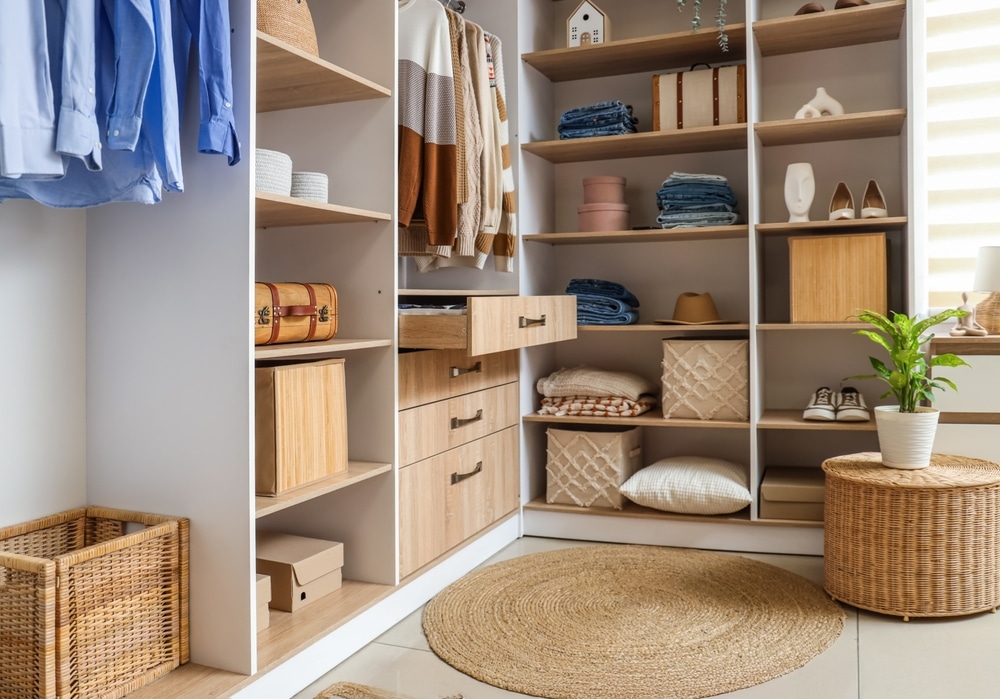
Professional stylists organize open shelving by creating zones. Zoning means grouping similar items together instead of scattering them randomly. For example, keep all glassware in one section, cookbooks in another, and decorative objects in their own space.
If you want to organize open shelving effectively, think in sections. Each shelf can be divided into two or three invisible zones. This approach prevents the eye from jumping around too much. It also makes it easier to maintain order because every item has a logical home.
You can reinforce zones with trays, baskets, or bookends. These tools create subtle boundaries that keep items from drifting out of place over time.
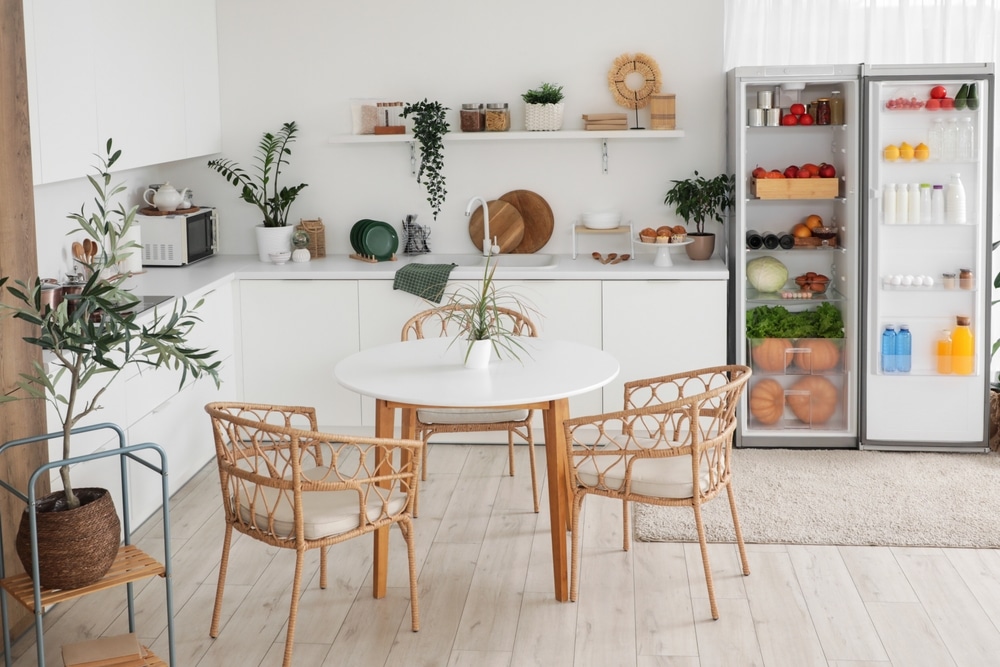
Mix Practical Storage With Decorative Elements
The secret to organize open shelving without mess is balance. If every shelf is purely functional, it may look cluttered. If every shelf is purely decorative, it may not serve your daily needs.
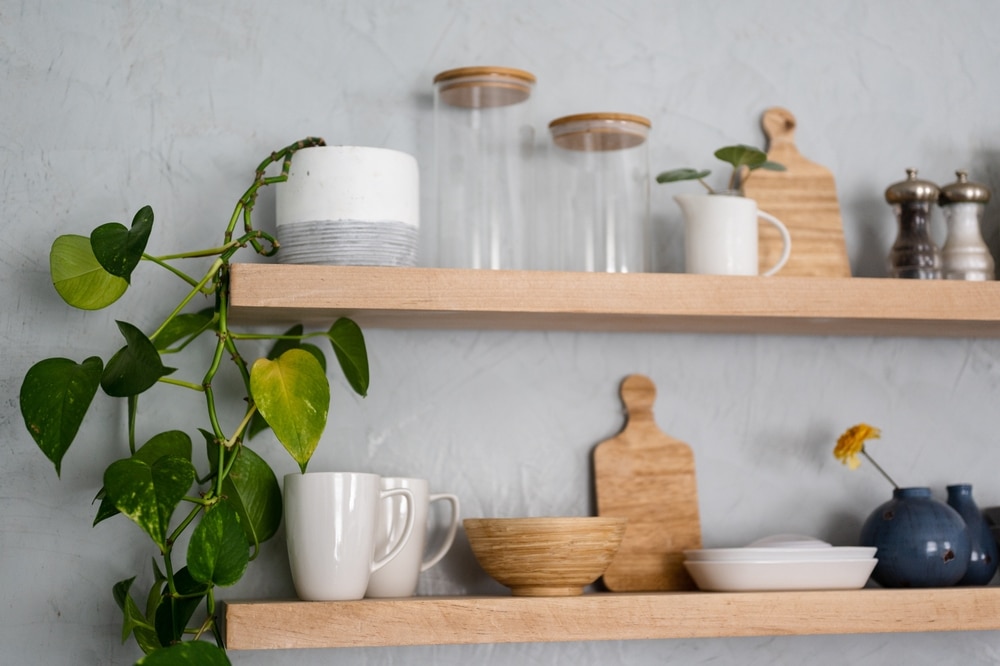
When you organize open shelving with both function and beauty in mind, aim for contrast. Stack plates next to a small plant. Line up neutral storage boxes beside a framed photo. Place everyday bowls near a simple ceramic vase. Mixing textures, heights, and materials creates visual interest while keeping the setup grounded.
Interior design research consistently shows that repetition of color and material helps spaces feel cohesive. So if you use wooden cutting boards on one shelf, consider echoing that wood tone elsewhere. Repetition creates harmony without extra clutter.
Create Breathing Room
Empty space is essential when you organize open shelving. Many people feel the urge to fill every gap, but negative space is what makes shelves look styled rather than stuffed.
People who successfully organize open shelving understand that space itself is part of the design. Leaving a few inches between stacks of dishes or allowing one shelf to hold just a few items gives the eye a place to rest. This reduces the visual noise in the room.
If you struggle with leaving space, try this practical method. Arrange everything as you normally would, then remove one item from each shelf. Step back and look again. Most of the time, it will instantly look better.
Maintain and Reset Regularly
Even if you perfectly organize open shelving today, daily life will slowly disrupt it. A mug gets placed in the wrong spot. A book is returned horizontally instead of vertically. Small shifts add up.
Keeping them tidy over time requires small, consistent habits. Take five minutes once a week to reset items to their designated zones. Wipe down surfaces and remove anything that no longer belongs. This prevents clutter from building up to overwhelming levels.
Seasonal edits also help. Every few months, reassess what is on display. Rotate decorative pieces or remove items you no longer use. Open shelving works best when it evolves with your lifestyle instead of staying frozen in time.
Choose a Cohesive Color Palette
Color plays a powerful role in how clean or cluttered shelves appear. Even if you organize items neatly, too many contrasting colors can make the setup feel chaotic.
Stick to a limited color palette whenever possible. Neutral tones like white, beige, gray, and natural wood tend to look calm and timeless. If you love color, choose two or three shades and repeat them intentionally across the shelves.
For example, if you have blue bowls, consider adding a blue spine book or a small blue decorative object nearby. Repeating color creates rhythm, which makes open shelving feel more organized without adding extra items.
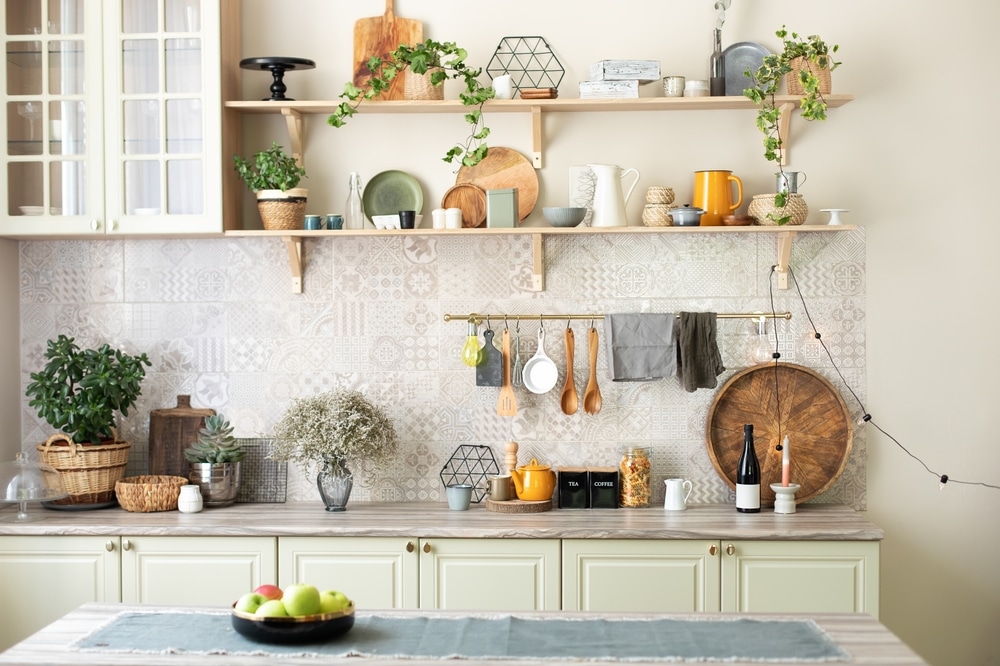
Be Honest About Daily Habits
Open shelving is not ideal for everyone. If you know you tend to toss items quickly without putting them back neatly, you may need a simplified system.
The more realistic you are about your habits, the easier it will be to maintain order. Use baskets to hide smaller items. Store rarely used pieces elsewhere. Place frequently used objects at eye level so they are easy to grab and return. A system that works with your routine will always outperform one that looks good but feels impractical.
Lighting Makes a Difference
Lighting can dramatically affect how open shelves appear. Shadows can make shelves look cluttered even when they are organized. Soft, warm lighting highlights shapes and textures in a flattering way.
If possible, position shelves near natural light. Alternatively, consider small wall mounted lights above shelves to brighten the display. Proper lighting enhances the effort you put into arranging everything thoughtfully. It also makes everyday tasks easier, especially in kitchens and workspaces.
The Psychological Benefit of Order
There is a psychological component to organized spaces. Studies in environmental psychology suggest that visible clutter can increase stress levels and reduce focus. Because open shelving is always in sight, its condition directly influences how a room feels.
Taking the time to thoughtfully arrange your shelves does more than improve aesthetics. It can make your home feel calmer and more controlled. When everything has a place, your mind can relax.
That sense of clarity is often what people are truly looking for when they redesign their storage.
Open shelving does not have to equal open chaos. With intention, restraint, and a bit of routine maintenance, you can organize open shelving in a way that feels both stylish and practical. Focus on purpose, limit what you display, create zones, and leave breathing room. Choose cohesive colors and be honest about how you live day to day. Small adjustments make a big difference over time. When you approach your shelves as a living system rather than a static display, they become easier to manage and far more enjoyable to look at every single day.
Do you want more amazing tips to reorganize your home? Then visit our home organization page right here